Apollo stands as a key financing partner for some of the most innovative sectors driving our future.
Read More
The interview originally aired on Yahoo! Finance on November 12, 2026.
Geopolitical tensions are exposing vulnerabilities in global energy supply chains, reinforcing the importance of diversified energy sources and transportation networks.
As countries and corporations seek to strengthen energy security, new investment is needed to expand infrastructure capacity and establish more resilient routes to market.
These dynamics are creating opportunities across the energy complex, from pipelines connecting major producing regions to growing liquefied natural gas (LNG) export capacity in North America.
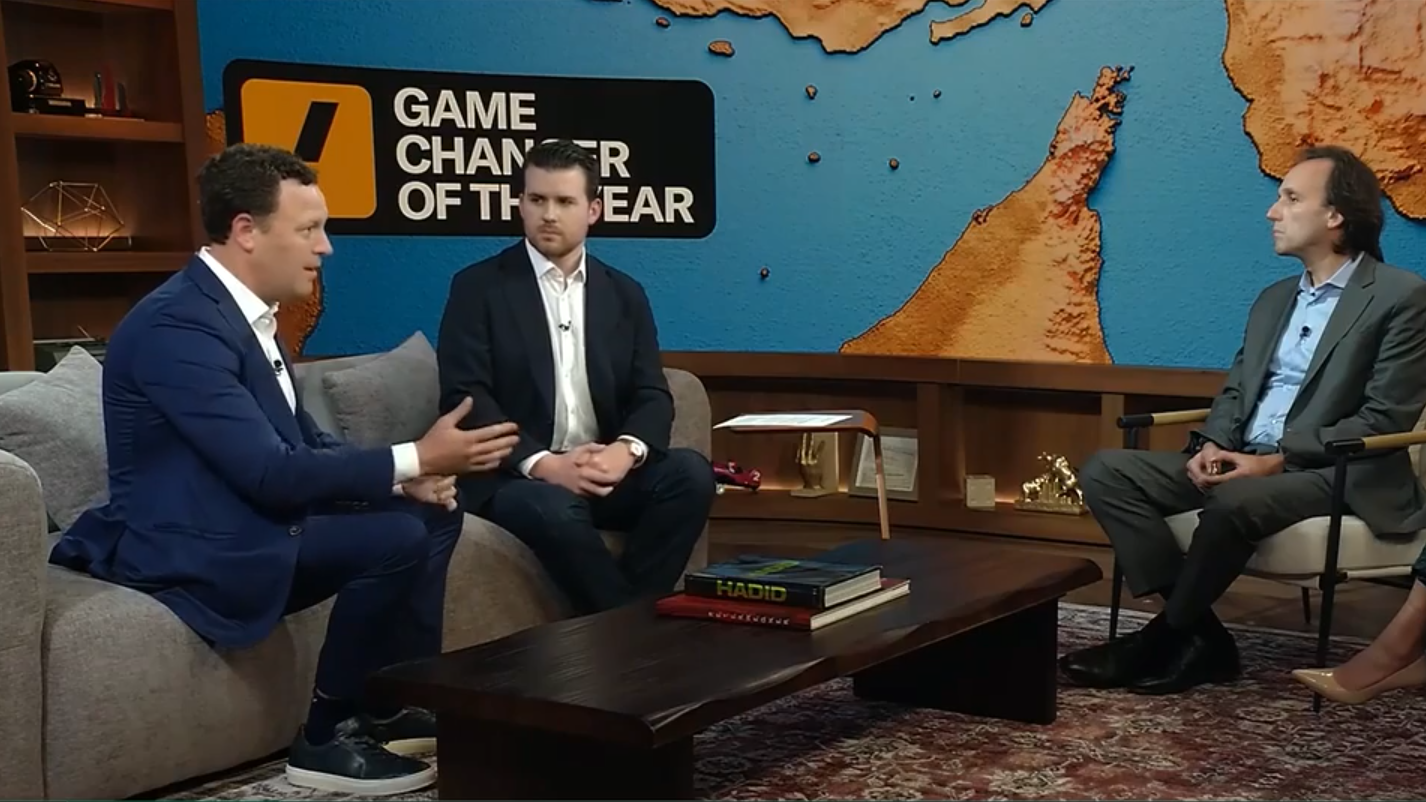
During a recent Yahoo Finance panel, Apollo's Dan Vogel discussed how these developments are reshaping global energy flows and driving long-term investment opportunities.
Recent geopolitical disruptions have highlighted the risks associated with reliance on concentrated energy transportation routes.
Jake Conley: I come to you on this because as Rebecca mentioned, we saw those headlines around the East-West Pipeline, which has been a crucial reroute. And one of the constants we've seen is the time, the investment that we've seen to try to prevent something like this happening again, whether it is pipelines rerouting, whether it is the US energy producers taking up their production, whether it is adaptation in the corporate world over the next, call it two, three, five years?
Dan Vogel, Apollo Partner: Look, I think those are a series of great questions.
Just on the last part first, corporations that are in the energy complex are looking at a massive opportunity to diversify channels of energy, and that's all forms of energy. We're talking a lot about oil so far, but global gas, fertilizers, all of the products that were flowing through this one critical waterway, we need to look at ways to get this to be less concentrated.
And one way we've seen that, for example, Apollo's been investing in the TAP pipeline, taking gas from Azerbaijan all the way to EU. It's now 4% of the EU natural gas stream. That's the type of thing that we think we're going to see more and more investment in to diversify away.
East-West Pipeline's done a phenomenal job of helping diversify oil exodus. The problem? It's now getting hit, so we don't have that channel as reliably as we've had.
Jake Conley: Yeah, that's right.
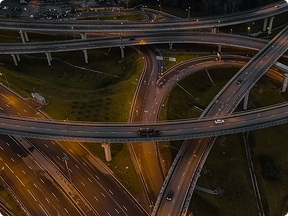
Against a backdrop of geopolitical uncertainty, continued investment in LNG infrastructure could help diversify energy supplies, strengthen connections with global trading partners and create new pathways for North American energy production.
Dan Vogel, Apollo Partner: What we are doing a great job of here is building out the LNG complex. So our allies around the world are getting the benefit of our cheap gas.
We have an abundance of natural gas in this country, and it's actually still pretty choked in the United States.
Five years ago, we were exporting about 10 Bcf per day on 100 Bcf per day market. We're now exporting about 20, and in about five years, we'll be exporting about 30 Bcf per day on 125 Bcf per day market. So we're still just cracking open this great, abundant natural gas for our allies around the world, and you're seeing contracts signed from the Middle East to the US, even in the last two days, with companies like Cheniere and Woodside and others in the Louisiana Gulf Coast.
So North America, from Canada down to Mexico, is going to be a big exporter of natural gas. We have the supplies, and that's going to change a lot of these routes as well. That's that diversification we talked about. There's two major conflicts we're talking about. Russia-Ukraine started this in 2022, and then now we have the Middle East. It's creating a lot of investment opportunity in LNG.
Tags
Tags