Macroeconomic Indicators & Trends

October 21, 2026

Winners and Losers if the Data Center Buildout Is Delayed

About the Author
avatar
Torsten Slok

Partner, Chief Economist

Share

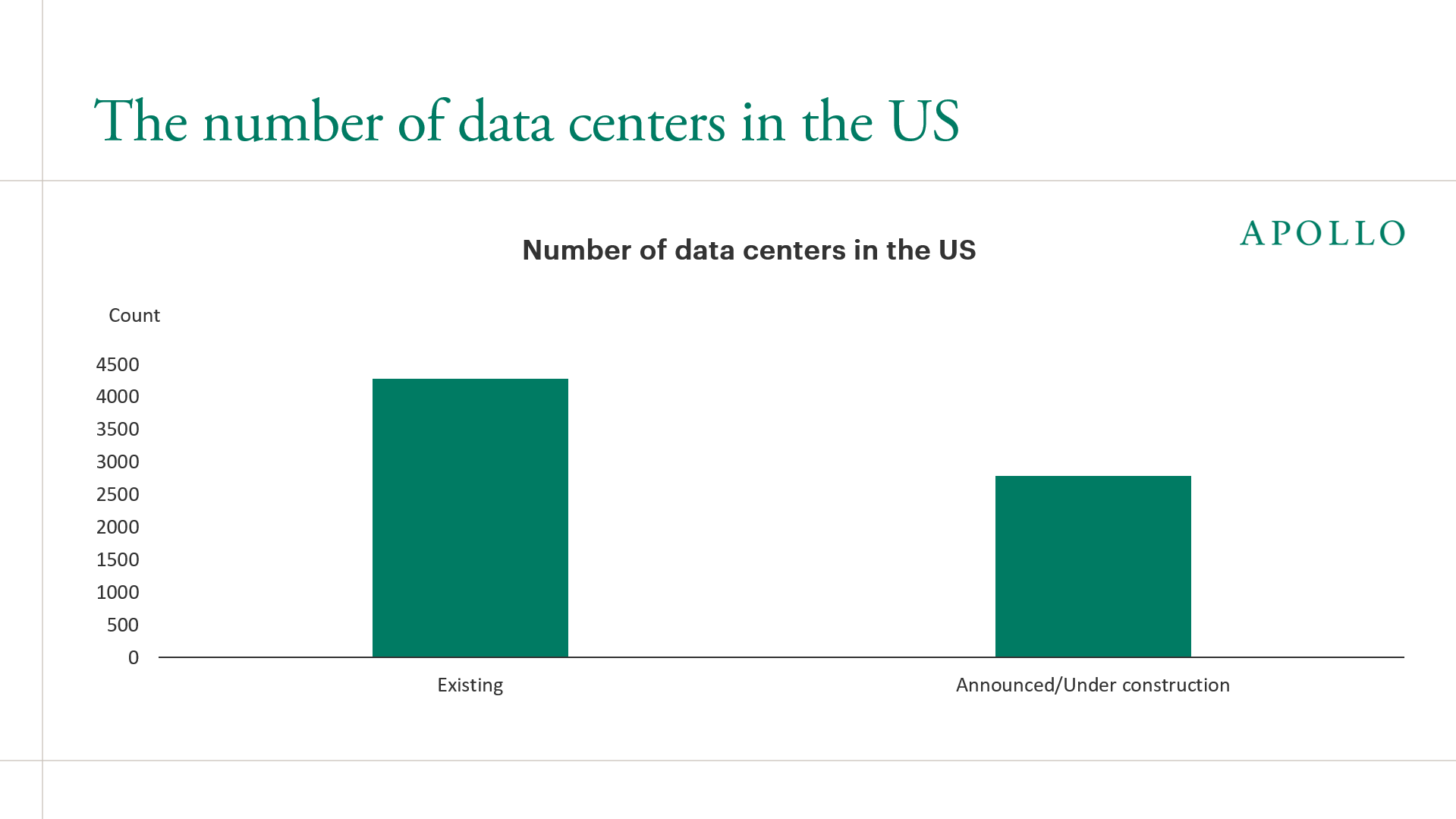
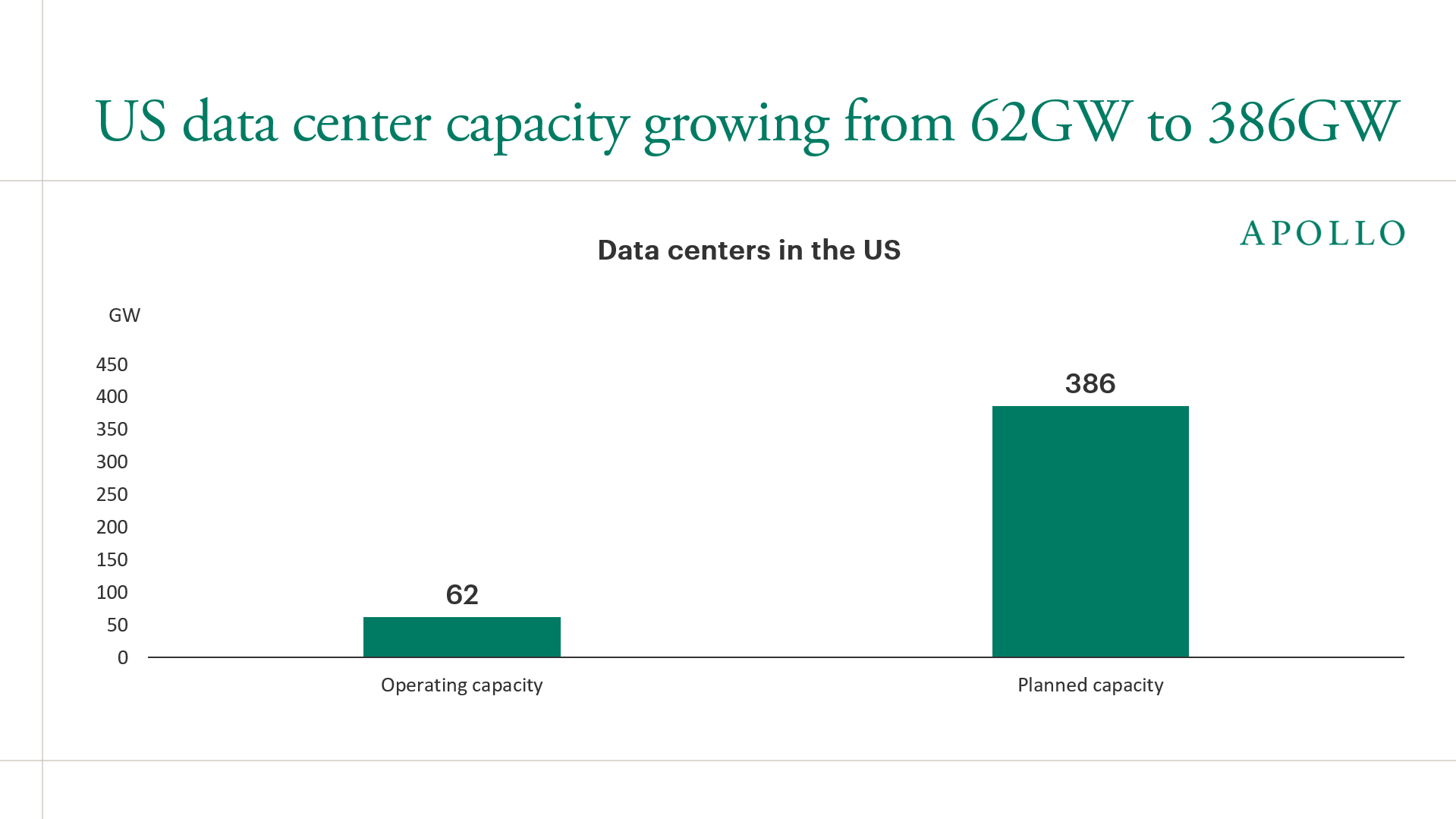
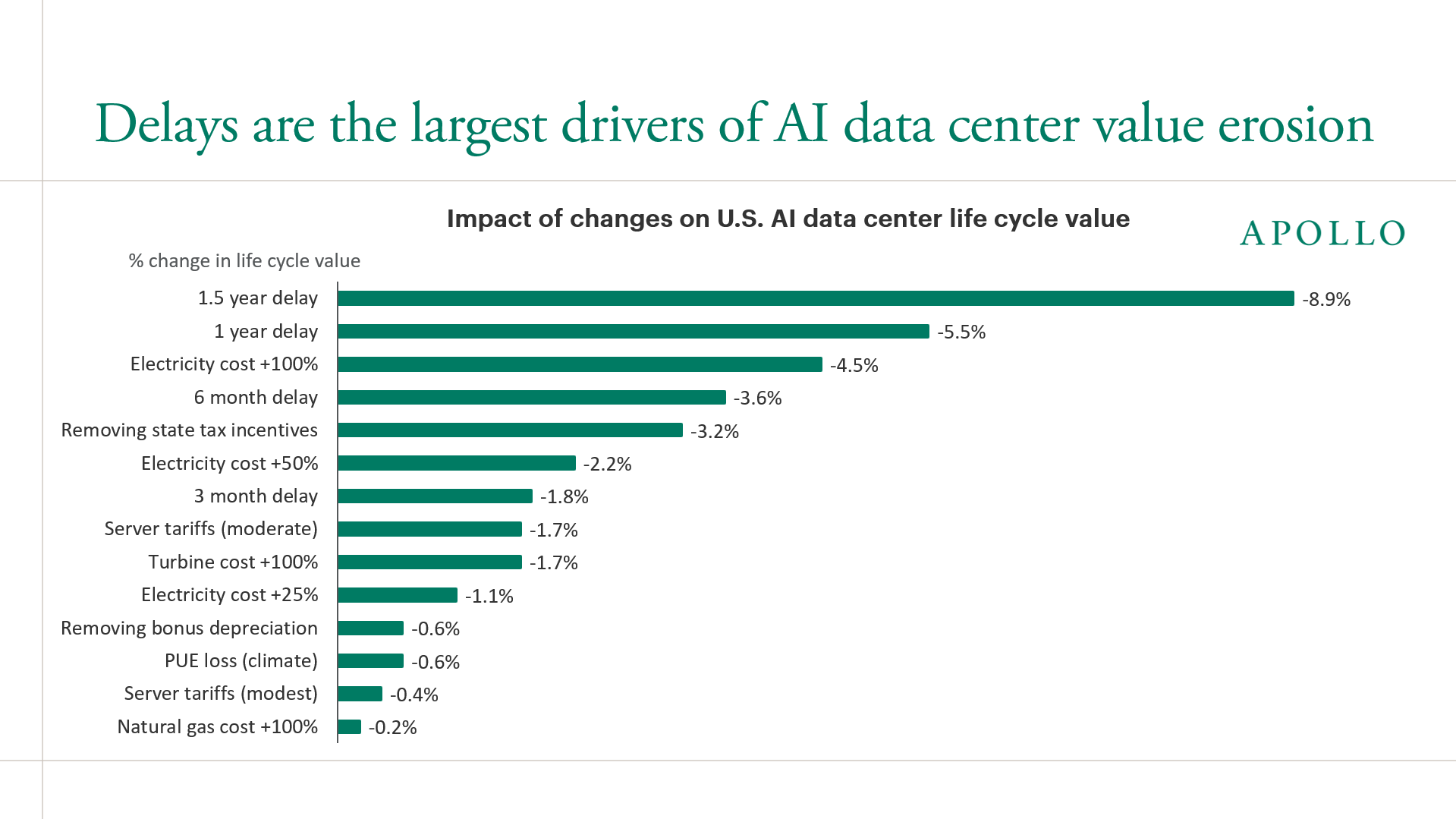
Compute demand is significantly greater than supply, so the speed of the data center buildout matters. Who are the winners and losers if the buildout takes longer?

Winners

  • Owners of operating data centers. Capacity that is already online can raise rents and fill every megawatt, since new competitors cannot arrive quickly.
  • Hyperscalers with capacity already secured. Those that locked in power, land and chips early can keep serving customers while rivals wait.
  • Holders of powered land and grid access. Sites with secured power, interconnection and permits are the scarcest input and hardest to replicate, so their value rises.
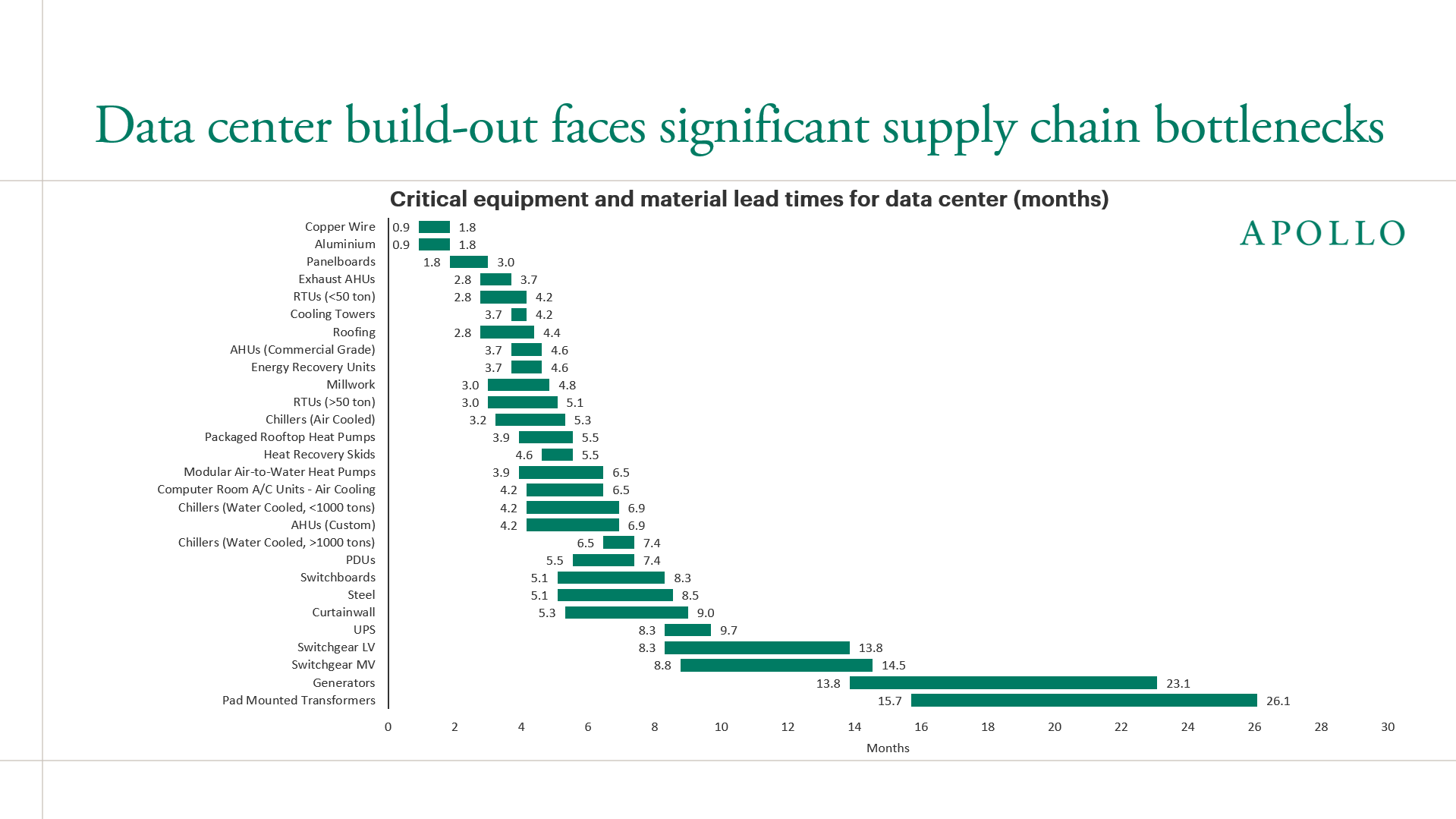
  • Suppliers of long-lead equipment. Makers of transformers, switchgear, generators and cooling gear keep long backlogs and pricing power, with lead times of up to 26 months for transformers.
  • Power producers and on-site generation. Where the grid is the bottleneck, gas turbines, fuel cells and batteries become more valuable.

Losers

  • Hyperscalers’ growth and earnings. Revenue is capped by supply rather than demand, and committed capex keeps accruing while capacity sits idle. Pricing power on existing capacity only partly offsets this, so earnings growth slows versus plan.
  • AI labs, startups and enterprise buyers. They face rationing, higher prices and slower model training and product launches, with smaller players crowded out first.
  • Developers and construction-stage investors. Cash flows start later while interest and carrying costs continue, lowering returns. Leveraged or pre-lease-dependent developers face covenant and refinancing stress.
  • Equity investors in the AI trade. Valuations that assume on-time delivery are exposed to earnings revisions and multiple compression.
  • The broader economy. Near-term GDP growth, which leans on AI investment, is lower, and the productivity gains from AI arrive later. Households and businesses on the same grid may also see higher electricity costs.

For chipmakers, the outcome of a delay is more mixed. Chip demand stays strong, but if sites cannot energize fast enough, chip deliveries could outrun installation and delay revenue.

The key distinction for investors is delay versus cancellation. A delay hurts returns by pushing cash flows out, but the asset remains and may become more valuable. The real risk is that scarcity unwinds, for example, if supply catches up in a rush or demand softens, which would erode the premium on existing capacity.

The bottom line for investors is that a delay would favor assets tied to scarce physical capacity, such as operating data centers, power producers and long-lead equipment makers, while assets priced on on-time delivery would underperform, notably AI-linked equities with high multiples and the debt of leveraged developers. Chipmakers face mainly timing risk, and hyperscaler bonds face mostly spread risk rather than default risk. The broader market would be exposed through the weight of AI names in major indices and through slower growth.

Download high-res charts


This presentation may not be distributed, transmitted or otherwise communicated to others in whole or in part without the express consent of Apollo Global Management, Inc. (together with its subsidiaries, “Apollo”).

Apollo makes no representation or warranty, expressed or implied, with respect to the accuracy, reasonableness, or completeness of any of the statements made during this presentation, including, but not limited to, statements obtained from third parties. Opinions, estimates and projections constitute the current judgment of the speaker as of the date indicated. They do not necessarily reflect the views and opinions of Apollo and are subject to change at any time without notice. Apollo does not have any responsibility to update this presentation to account for such changes. There can be no assurance that any trends discussed during this presentation will continue.

Statements made throughout this presentation are not intended to provide, and should not be relied upon for, accounting, legal or tax advice and do not constitute an investment recommendation or investment advice. Investors should make an independent investigation of the information discussed during this presentation, including consulting their tax, legal, accounting or other advisors about such information. Apollo does not act for you and is not responsible for providing you with the protections afforded to its clients. This presentation does not constitute an offer to sell, or the solicitation of an offer to buy, any security, product or service, including interest in any investment product or fund or account managed or advised by Apollo.

Certain statements made throughout this presentation may be “forward-looking” in nature. Due to various risks and uncertainties, actual events or results may differ materially from those reflected or contemplated in such forward-looking information. As such, undue reliance should not be placed on such statements. Forward-looking statements may be identified by the use of terminology including, but not limited to, “may”, “will”, “should”, “expect”, “anticipate”, “target”, “project”, “estimate”, “intend”, “continue” or “believe” or the negatives thereof or other variations thereon or comparable terminology.