




Leading with Private Investment-Grade Credit
What is Private Credit?
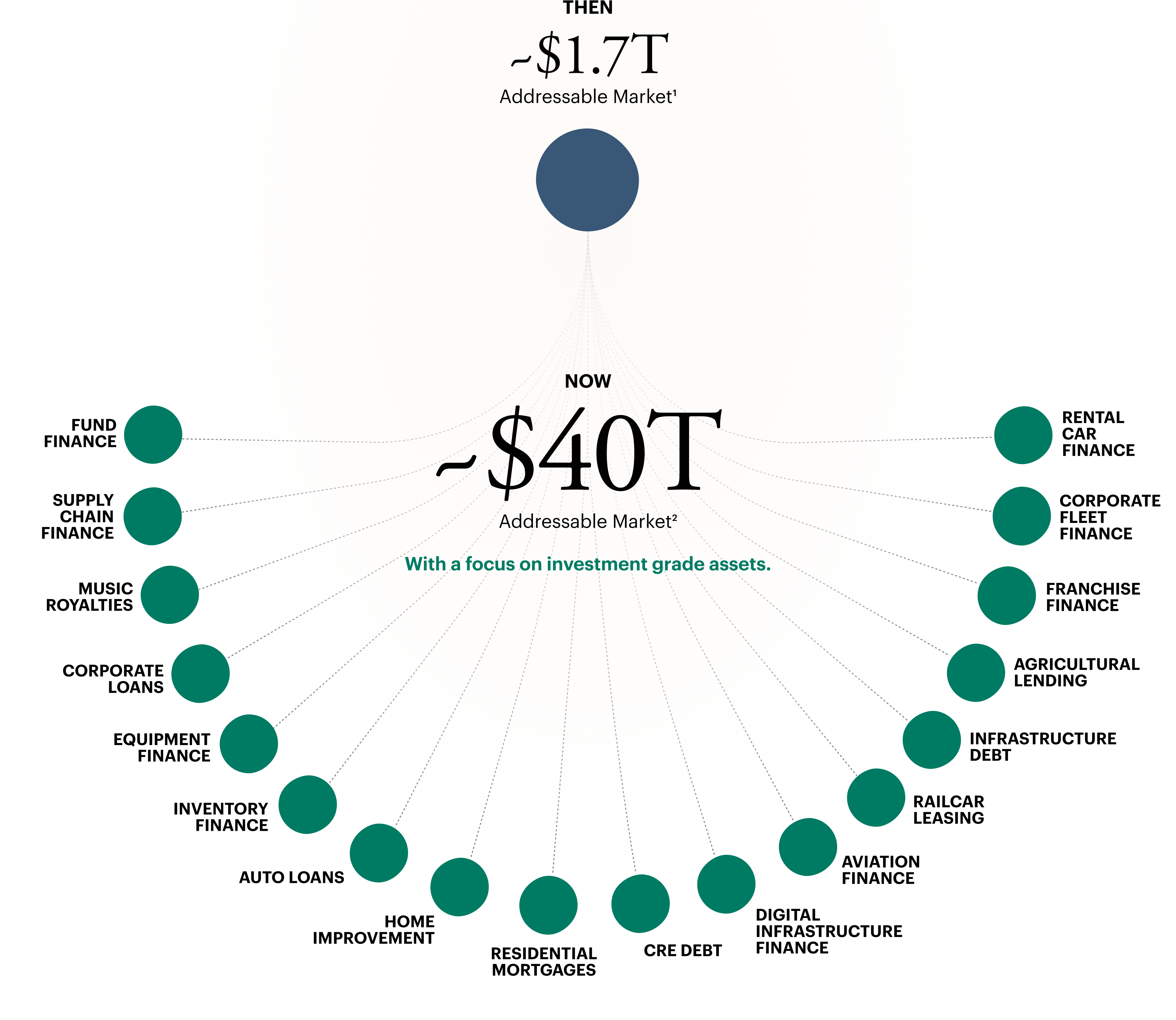
At Apollo, we view private credit as a $40 trillion market, a majority of which is investment grade. Non-traded – or “private” – corporate and consumer credit can be found on the balance sheets of banks as well as insurers, asset managers, pensions and many others in the investor marketplace. Private credit finances business growth and innovation, it supports household prosperity and it helps to fuel the real economy.
The vast majority of private credit is private investment-grade credit which helps to generate high-quality yield and retirement income for families and savers across the country. As the U.S. and much of the developed world navigate aging demographics and savings shortfalls, we believe private fixed income will continue to play an expanding role in supporting retirement security for millions of families.

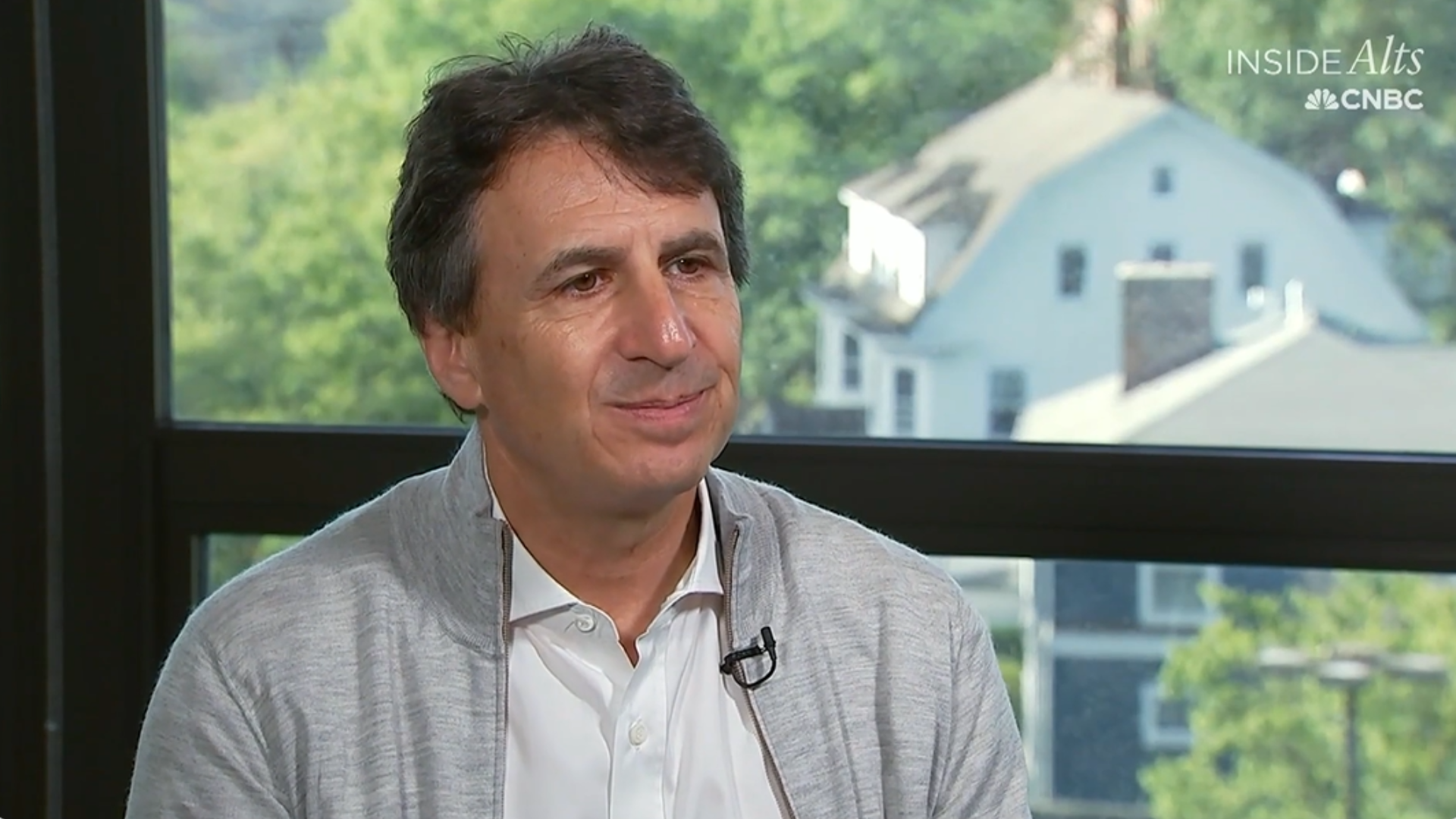
“Private credit helps to fuel our economy, and the depth and diversity of its funding sources promotes resiliency in the financial system. Not only has private credit helped make U.S. capital markets the envy of the world, but also it generates stable investment income for a vast and growing population of retirees.”
Marc Rowan
Chief Executive Officer
The Role of Private Credit
Diverse sources of credit promote resiliency in financial markets.
In the U.S., businesses and consumers are not dependent on a single source of funding, and the depth of our private credit and securitization markets allow a wide array of borrowers to access financing. Much of this credit is funded by the investor marketplace – insurers, mutual funds, institutional investors and the like – which we believe promotes financial stability thanks to its diversified nature and de-leveraging effects.
US Credit Markets are Diversified

When Credit Leaves the Banking System, It Creates a De-Leveraging Effect
Greater access to credit supports growth in the real economy.
Following the Great Financial Crisis, bank balance sheets have shrunk and retrenched from many traditional lending activities. Enter the investor marketplace, which has stepped in to fill the void, socializing credit among much larger and more diverse pools of capital, and often through structured securities that allow mid-sized business and consumers to access financing that is otherwise unavailable to them. Financing is the lifeblood of the economy, and at Apollo, we pride ourselves on our ability to be there for borrowers throughout market cycles, with retirement and investment funds that can be fully matched to corporate and asset-backed loans.
the Insurance funding model is reliant on sticky, predictable and stable liabilities, and able to be duration-matched
example: Fully Duration matched

- Surrender charges & MVA
- Tax efficient
- Not a source of daily cash
- Fully insured & guaranteed
Private credit can generate attractive risk-adjusted returns and serve as a potential fixed income replacement.
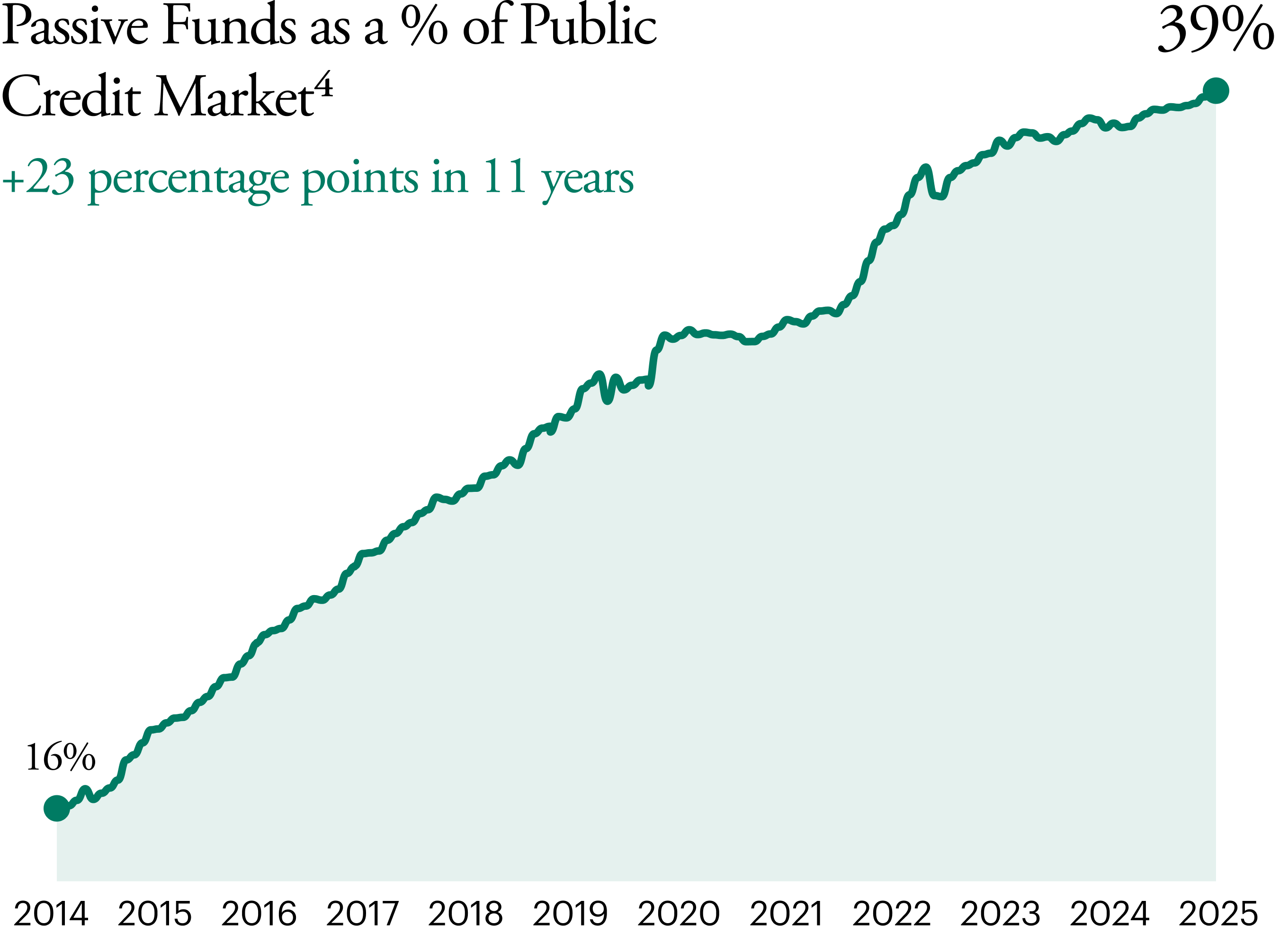
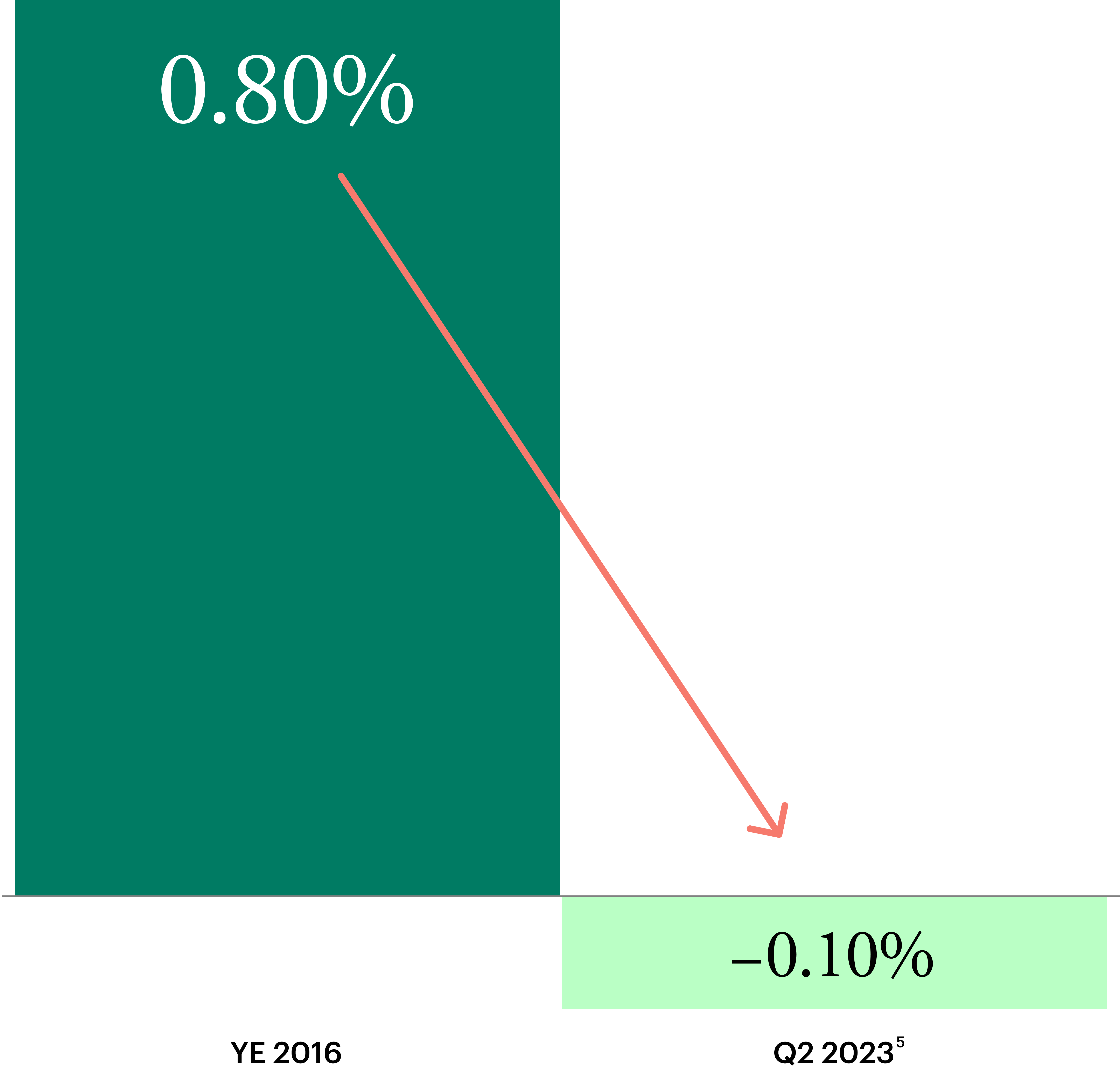
Private credit has the potential to provide investors with enhanced returns per unit of risk, including in private investment-grade assets. We believe this can be particularly meaningful in the context of an increasingly indexed and commoditized public fixed income market, and amid a growing retirement crisis in which savers need high-quality investment income.
More credit capital is now indexed/passive rather than actively managed
Excess Return of Active vs. Passive
Corporate Credit Funds
Five year trailing as of year end
Meanwhile, the U.S. retirement population is growing rapidly
US Retirement
Population Growth
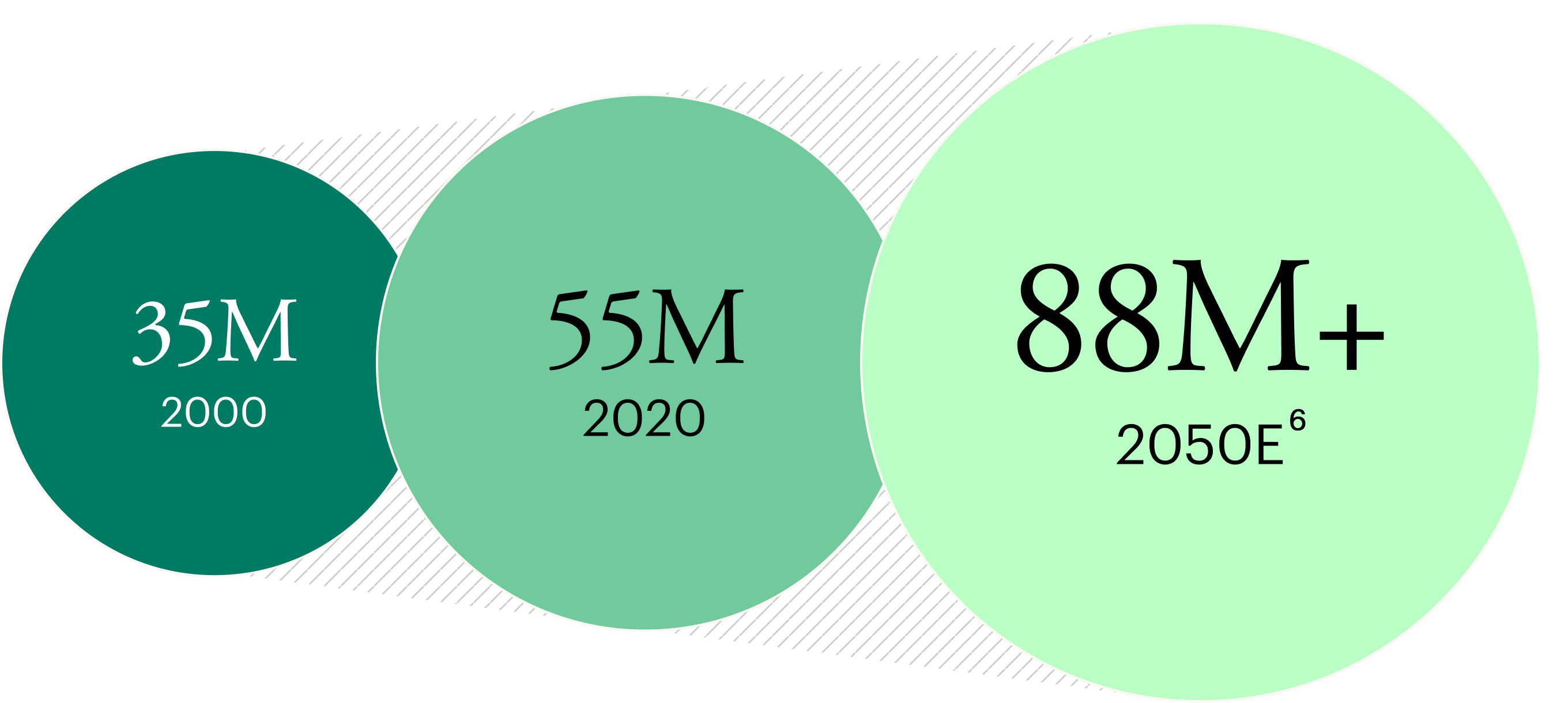
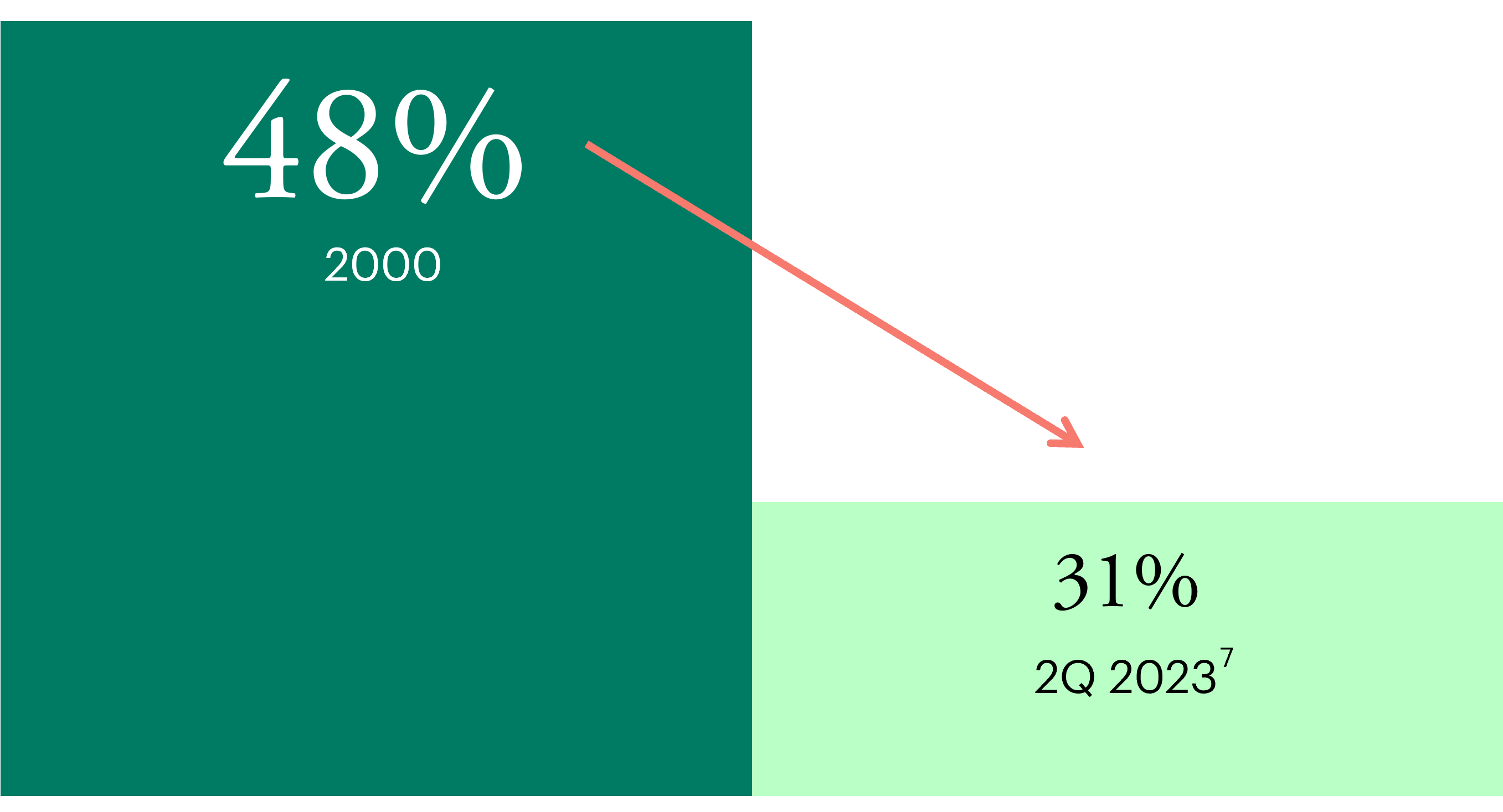
And retirees have less guaranteed income than before
% of Retirement Assets Held in
Defined Benefit Pension Plans
How Does Apollo Generate Private Investment-Grade Credit?

Direct Origination
Apollo’s scale and expertise has enabled the firm to act as a flexible and reliable solutions provider to borrowers, providing corporate and asset-backed loans to some of the world’s largest and highest-quality companies on a bilateral basis.

Origination Platforms
Apollo has built an ecosystem of origination platforms focused on asset-backed and specialty lending. These businesses span aviation, equipment and trade finance, warehouse facilities and more. Across these 16 platforms, our ecosystem originates private investment-grade credit at scale.

Bank Partnerships
Apollo partners with banks on billions of dollars of private credit origination each year, often leveraging our collective origination capabilities and relationships in combination with Apollo’s long-dated, flexible capital base.
By originating private credit, Apollo can apply its high lending and risk management standards, from rigorous due diligence and credit underwriting, to controlling documentation, to maintaining borrower relationships.
Related Insights & News






Business Overviews
Credit Platform
We serve as a financing partner of choice for large corporates, sponsor-backed businesses, specialty lending platforms and more.
Asset-Backed Finance
ABF solutions can provide a competitive cost of capital to fuel companies’ business plans and diversify their funding sources alongside corporate loans and bonds.
Origination Platforms
Apollo’s origination ecosystem spans 16 standalone platforms and thousands of professionals dedicated to high-quality private credit origination, financing companies across industries and geographies to support their growth.
Explore Our Strategies
Footnotes:
- Preqin Private Debt AUM as of December 2025.
- Reflects the total addressable market as evaluated by Apollo. Includes European crossover. Not an exhaustive list; includes certain assets and asset classes that may be unrated or not rated 'investment grade' by agencies but have investment and risk characteristics that are distinct from levered lending. Subject to change at any time without notice.
- Source: Bank for International Settlements. Refers to nonfinancial business lending.
- Source: Bloomberg, Apollo Chief Economist. Note: Data is based on estimates from sample of 8,689 funds.
- Source: Morningstar’s Active/Passive Barometer, June 2023 & December 2016. Intermediate term bond fund performance equal weighted.
- Aged over 65. Sources: U.S. Census Bureau, Deloitte Insights.
- Source: ICI Retirement Institute.
