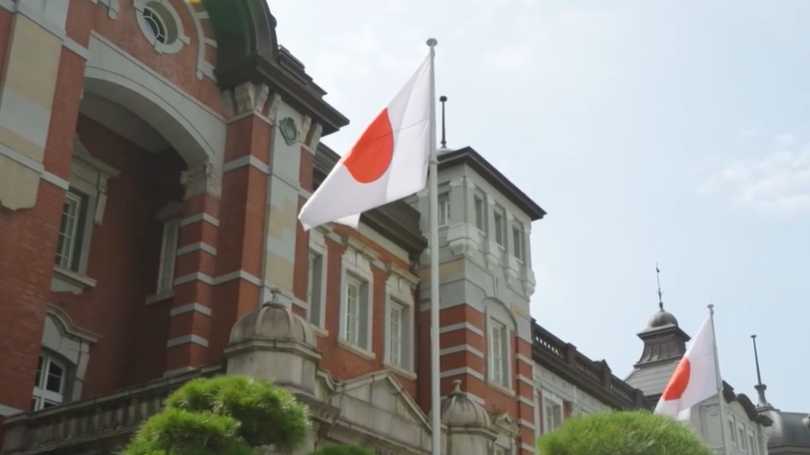
David Westin: This is Wall Street Week. I’m David Westin, bringing you stories of capitalism. This time, Japanese style. This is an ancient land with the imperial dynasty stretching back over a thousand years. Apollo Global Management invited us along as it convened a meeting of its 200 partners from around the world to see firsthand the investment opportunities it sees in Japan today, a world that has not traditionally been associated with risk.
We're going to talk with Marc Rowan, the head of Apollo, as well as the leaders of Sony, Panasonic Automotive, and the Tokyo Stock Exchange. But we start with the story of "choraku". That's a Japanese term meaning falling behind. In the 1980s, Japanese industry was the envy of the world in a variety of sectors, such as automotive, electronics, and steel. As a result, asset values went up, particularly here in Tokyo, where real estate values went sky high, supported by patient capital that did not demand a lot of returns. The 1990s, though, saw that asset bubble burst. And when the Japanese government and Japanese banks did not step in aggressively, they took what was a lost decade and turned it into a lost three decades.
Marc Rowan: Most people's expectation of Japan or business mindset of Japan is 30 years of stagnation.
Hiroki Totoki: I think, you know, we call the lost ages during decades, and we do not have substantial growth in Japan.
Eiji Ueda: Japan faced deflation for a very, very long time.
Hiromi Yamaji: Japan has been, you know, suffering from deflation for more than two decades.
David Westin: In the late 80s, Japan's economy grew by as much as 6.7% a year, only to have that growth plummet for most of the next 30 years, hovering between 0 and 2% and contracting during the Great Financial Crisis and the COVID pandemic, relegating what had been the third largest economy in the world to number 4, as Germany surged past. The Nikkei stock market went 34 years without setting new highs. Japanese government bond yields turned negative and stayed there for years. But all that could now be changing as Japan emerges from those lost decades.
Marc Rowan [Walking in Tokyo]: What a lovely day in Tokyo.
David Westin: Marc Rowan is CEO of Apollo Global Management.
Marc Rowan: This is a savings culture. And holding on to your cash or leaving your money into JGBs for the past 30 years has been fine, because there's been no inflation. In fact, there's been deflation. All of a sudden, you have closer to 3% inflation. You have interest rates up for the first time. And that savings is going to be deployed productively. And now some of it has to go toward retirement. They will want better solutions for retirement. But some of it is just going to keep up with purchase price and purchasing power. I think about what's happening in Japan. And in Japan, they're going through generational change. And it's generational change in corporate governance. It's in interest rates. It's in government policy. And in many ways, they are the first of the Western democracies to face real aging, retirement, and high levels of government debt. And what's happening here is totally different than people's expectation, because most people's expectation of Japan or business mindset of Japan is 30 years of stagnation. And that is so dynamic here today.
David Westin: The thing that got things going again for Japan was, ironically, adversity. As supply chains came under stress from the COVID shutdown and the war in Ukraine put pressure on energy prices, a big problem for a country dependent on oil from abroad.
Eiji Ueda: With the supply chain breakdown, corporate has excuses to transfer the price to the retail. So now the CPI started to suddenly, which has been 0 or negative for a very long time, suddenly went up to almost 3%. If she can get to third, that's a long...
David Westin: Eiji Ueda is head of Asia Pacific for Apollo.
Eiji Ueda: Everybody has to think differently. So with the deflation environment, cash has been the king. But with the inflation at the... close to 3%, cash is not the right asset to own. It's actually the worst assets to own. So that has to put the pressure on a lot of people to think about things differently.
Mireya Solis: Even before the return of inflation, those responsible for Japanese markets were thinking differently, starting with Prime Minister Abe's call for market reform back in 2015. And it's true that for maybe a good decade, Japan did struggle in finding its way out of that banking crisis.
David Westin: Mireya Solís is director of the Center for Asia Policy Studies at the Brookings Institution, and author of "Japan's Quiet Leadership."
Mireya Solis: But the fact is that we have overused the image of the lost decades, because this has not been a period where Japan has stood still. And people refer to this period as 30 years. And a lot has happened in the economy, in the politics, in international projection of Japan, that actually shows that undercurrents of change have repositioned where Japan stands today. Some areas, actually, there was a lot of progress. I think in the area of corporate governance, you do see important changes there. I also believe that the notion of womenomics, the idea that Japan needed to create conditions for women not to have to choose between a career and a family, raising a family, those also were very, very positive, so much so that Japan actually has a very high level of female labor participation.
Daivd Westin: As much as Prime Minister Abe may have laid the groundwork for reform, the state of the economy did not demand the changes he wanted. For that, they needed 3% inflation to kick in.
Mireya Solis: Well, he has changed everything. He has changed the politics, he has changed the main economic challenges that the country faces. And I think in many ways, it has redirected areas where reform is necessary.
David Westin: Now, inflation has returned. And there's a new prime minister in town, one who's just won a landslide victory and seeks to take Abenomics reform to a new level.
Hiromi Yamaji: So many significant changes are happening in the Japanese, not only Japanese market, but also Japanese society.
David Westin: Hiromi Yamaji is group CEO of the Japan Exchange Group, which oversees the Tokyo and Osaka stock exchanges. What was the role of government, the Japanese government, in the reforms?
Hiromi Yamaji: I think, you know, since the Prime Minister Abe supported our governance reform back in 2015, I think all the successors of Mr. Abe, like Mr. Suga, Mr. Kishida, Mr. Ishiba, and the current Ms. Takaichi, all of them were quite big supporters of the governance reform, because all of them were convinced that growth of the private sector is essential for the growth of the entire Japanese economy.
David Westin: Since taking over the TSE in 2021, Yamaji has implemented a series of reforms to encourage Japanese companies to become more profitable and more accountable. Your reform of the markets has various aspects, to including price to book ratio and interlocking ownership of equity and independent directors. What are the most important ones?
Hiromi Yamaji: I think to transform the mindset of the management of the companies, that's very important, and also probably the most challenging thing. And PBR is just kind of a financial indicator to just gauge how much you progressed. But I think fundamental challenges to transform the mindset of the management.
David Westin: Not all minds are willing to be transformed. Have you had some management changes in order to respond to the reforms?
Hiromi Yamaji: Well, I think, you know, at least once a year, we've analyzed the current situation of the Japanese market or Japanese companies, and we are not the entity to assess their progress. The global investors is the, you know, the people who assess how much progress we've made. And last year, the most recent one, we did an analysis of the current situation in December last year, based upon the 400 global investors, domestic and overseas.
David Westin: If the markets are any judge, Yamaji's efforts are bearing fruit.
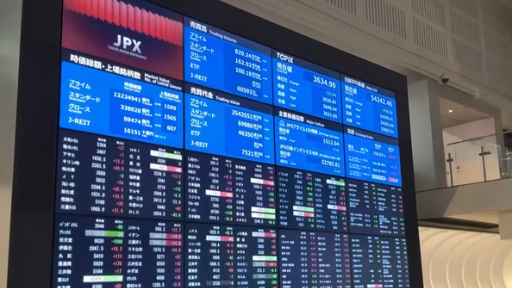
Hiromi Yamaji: Last year was a record high, more than we have 5,100 monies, and the total amount was 35 trillion yen. Both of them are record high. And that means that the buyer side seeking for the, say, more growth or urgent needs for growth, and the seller side is trying to reorganize their business portfolio.
Eiji Ueda: Or Tokyo Stock Exchange pushing the corporate to create more efficiency in the capital usage for corporates. And ROE has been very, very low. And more than 50% of the companies listed in Japan has been trading below the book value. So they are pushing for capital efficiency. And they need to explain the reason why they trading below the book.
David Westin: The Japanese push for higher returns in response to reflation comes against the backdrop of a long-term challenge that's increasingly common in major economies around the world. A rapidly aging workforce.
Eiji Ueda: Population between age 14 to 65 hit the peak in 1990. And since then, because society started aging, people spend less. So always demands shrink faster than supply. So the country faces long term deflation and low growth.
Marc Rowan: I think we're looking at things that are structural that are going to take place over the next 5 to 10 years. The need for Japan to provide for its aging population and to deal with its aging population. The need for Japan to finance what it needs to finance. And the opportunity that Japan has.
David Westin: Japan responded to the challenges of its aging workforce by adding workers from groups that had been on the sidelines.
Mireya Solis: Well, this is clearly one of the most serious challenges, because the sheer drop in the level of the population, the absolute numbers, but also the graying of the population. The other one is, of course, to bring in women into the workforce, to bring in the elderly, who in Japan tend to be still very active, and to make sure that you can, as much as possible, maximize labor participation.
David Westin: But there is a limit to how many women, elderly and foreign workers Japan can bring into the workforce. What does reform of capital markets do to help that problem?
Hiromi Yamaji: I think, you know, the corporate governance reform says that we'd like to see more active female workers in the workforce, and also more senior persons working freely in Japan. Now the labor force increased in Japan. But obviously, female job participation, as well as senior members job participation, there's a ceiling. I think, you know, we don't expect too much from those new forces coming in. So I think Japanese companies has been making a huge investment into automation or digitalization, AI usage. I think those are very important to enhance productivity, even though our population has been shrinking, and also is going to shrink in the future.
David Westin: What are the large long term capital needs that companies say, "I need to have this for a long period of time?"
Marc Rowan: This is manufacturing. This is energy. This is AI and data. This is infrastructure. These are the big buckets that we're looking at. And the scale just of the infrastructure market, or as I say, just of the AI data energy market as one package, is beyond anything we can comprehend. This is measured in trillions. Sometimes I joke and I say we're about to spend every dollar since the invention of fire. And that's what we're doing. We are, as a world, going to issue more debt, access more capital in 2026 than ever before. I think this is ultimately about growing the pie. I think the Japanese were very defensive for a long period of time with good reason, given what was happening in the home market. I think there's a new swagger.
David Westin: Coming up, matchmaking between abundant capital and abundant capital needs. The opportunities that presents for companies like Apollo.
David Westin: This is a story about "henkaku". That's a Japanese term meaning fundamental reform. We've come to Japan to see how and why it is changing the way it does business, changing what it expects for its corporations and changing what it expects in its investments. Not just for the sake of change, but in order to raise the capital needed to invest in productivity. Over the last three decades, Japan fell from second to fourth in the ranking of world economies. As it struggles to climb back up the leaderboard, it is focused on investment. In this case, trillions of dollars worth.
Eiji Ueda: 55% of the assets sits in cash historically. And the corporate has been accumulating a lot of cash on balance sheet because they want to be safe and they want to be sustainable. And the cash is the safest asset for them to own. So we even though the rate is the lowest in the world, the ratio of the cash on balance sheet among the older corporate was the highest in the world.
David Westin: That must be a lot of cash.
Eiji Ueda: It is. Retail asset is 2,000 trillion yen. So that's a lot of cash.
David Westin: While almost 55% of household financial assets in Japan sat in cash and deposits in 2022, a figure far higher than the US or Europe, by 2024, that number had inched lower to around 50%. And the percentage of assets in equity markets had crept up to 14%. The head of the Tokyo and Osaka stock exchanges, Hiromi Yamaji, says that many Japanese companies are starting to use that cash to change the way they do business.
Hiromi Yamaji: Japanese companies are quite receptive for new development of technologies like AI. I think Japanese companies are already adopters of new technologies. But at the same time, how do we take advantage of those new technologies that, you know, you have to be quite serious how to utilize in what kind of areas. So now we are still in the very early stage. But I think Japanese companies are quite receptive to those new ideas.
Eiji Ueda: Japan is, I think, well positioned for the industrial renaissance. The energy shift, supply chain breakdown, and the need to rebuild it. AI changes. There are a lot of big themes going on where companies need a lot of capex. And the size of the new finance... finance needs is growing so fast that the big demand for the capex will create a lot of demand for new finances, which a lot of capital can shift to.
David Westin: Japan may have a big need for investment. It may have the capital that's needed. But are its financial institutions in a position to direct the capital to where it is needed and at scale?
Marc Rowan: Japan is like, I would say, like many economies. If you think about the structure of the Japanese market, it is primarily two financial products, bank debt and equity.
David Westin: Apollo CEO Marc Rowan sees his company as providing a much needed third way to finance the capital investment Japan needs.
Marc Rowan: The equity market in the context of the world is actually quite small, although it is the second largest equity market in the world, but it is roughly the size of Nvidia. Just to put things in perspective. There's not the well developed kind of corporate bond market that exists throughout the US. And so I think what we're watching, not just in Japan, but around the world, is corporate CFOs, corporate treasurers, now understand that there are 3 types of finance. Things that are really highly rated and short, you want to be with your banks, there's no better provider. Equity, very, very expensive. Public markets for plain vanilla, very, very good execution. Everything else comes to the private market. The largest part of the private market today is investment grade. It is these large companies who have these transformational opportunities, who want to match long dated investments, and most of what we're doing is long dated, with long dated capital. And that isn't what the banking system does well. That is not what the public markets do well. And so you're seeing this extraordinary growth. In the US, we've seen it in lots of ways. You have Meta's financing last year at some 30 billion. In Europe, we've seen the Europeans, who also have structural issues vis a vis capital availability, really embrace private finance. In Japan, we're seeing the beginnings of that. The work we've done with Sony, the work we've done with SMBC, the work we've done in financing, buy now, pay later Japanese companies, is beginning to open up in the minds of CFOs and treasurers that there's just another alternative.
David Westin: It's not that private credit firms like Apollo seek to place Japanese banks. Apollo's team says that it can supplement what the banks do.
Eiji Ueda: The public credit market is very, very small. I think there's only 60 trillion yen outstanding on the corporate bond market compared to the size of the finance that's been quite small. So a lot of finance has been done by banks who is basically private credit. So I think there's a demand for longer-dated capital and also complex capital because the bank can provide cheaper and short term finance. And with the huge capex needs, they need longer term, more complex finance structure where the private capital markets can solve the problem for it.
Marc Rowan: We will start to establish private as just another alternative for every CFO and every treasurer. And by the way, in partnership with the Japanese banking system, because at the end of the day, we don't do what the banks do. We don't provide advice. We don't provide hedging, derivatives, M&A, or any other service. That's the purview of the banking system. We provide a piece of capital that is in very short supply in Japan, investment grade, long dated to finance what they need.
Hiromi Yamaji: It's growing gradually. And I think it's a good alternative investment vehicle, I mean, alternative funding vehicle from the viewpoint of the companies. As you said, used to be banks were the main creators. But in these days, because of the banking industry has so many restrictions, capital restrictions, kind of things. And so their capability to provide lending to a private sector is getting to a limited amount. So I think private credit can play a bigger role in Japan as well.
David Westin: Firms like Apollo Global Advisors may see an important opportunity in the newly evolving Japanese markets. But are Japanese investors and companies receptive to adding private market alternatives to their means of financing? As you go out into the Japanese market, what resistance do you get to these new forms of investment vehicles?
Marc Rowan: I don't think it's resistance. I think, again, just like in the wealth market, this is about education. In many instances, we are not going to Japanese corporates directly. We're going with their longtime banker. In some instances, particularly when Japanese companies are financing overseas, we'll deal with them directly. Our team here is unbelievable. From our chairman, Tanaka san, to the head of our Asian business, Ueda san, these are very well known, very substantive individuals who have been at the cutting edge of finance for a very long time. The weight we have put here, the intellectual capital we've put here is second to none. I think we're at the beginning of a trend, but I think this is going to be just a fascinating market for any number of reasons.
David Westin: I have never seen a business strategy or an investment that doesn't have some downside risk. So what are the possible downside risks to this bright new future that you see?
Marc Rowan: Well, the downside risks are the same risks that exist around the world. So for me, the way I describe it, is in my business career, most of the time, or I'd say 95% of the outcomes are between two sidelines. And sometimes we like what's on the playing field, and sometimes we don't. Sometimes the economy is better or worse. Sometimes the capital markets are better or worse. Valuation is better or worse. But we know how to navigate those things. And the chance of an outside the sidelines outcome was small and unpredictable. That's my normal setup. Today, I only think 70, 75% of the outcomes are between the two sidelines. And what's between the two sidelines is amazing. Capital cycle, growth, employment, inflation coming down on a worldwide basis, lots of opportunity. But we can't ignore that there is an increased risk of an out of the box, out of expected outcome. And it's of a magnitude that investors, people like us, need to pay attention to that. And yes, there's always the credit cycle. I don't think that's what we're talking about. I think we're talking about geopolitics. I think we're talking about government deficits. I think we're talking about rates up and rates down. And so for the first time in a very long time, we are trying to address outcomes that perhaps could occur outside of what we normally see in front of us.
David Westin: But absent one of those outside the sidelines events, Rowan sees his firm as well positioned for a bright future in Japan.
Marc Rowan: I look at our toolkit. Our toolkit starts with retirement services. We have been here any number of years. We are a very large reinsurance player to the Japanese market. And we are creating products for Japanese retirees. Second, we're a provider of capital to industry, whether it's Sony, or SMBC, or others. Third, we are in the buyout business here. This is one of the best buyout businesses here. You've met with some of our portfolio companies or companies we've had an investment in here. It is a very robust market and a very interesting market. The capital coming off the sidelines from households is looking for better rates of return now that they are facing 3% inflation. And I expect this to be a very promising wealth market where people want safe yield. They want defensive equity. They want the kinds of things that have been available institutionally around the world for a long time that are now available as wealth products.
David Westin: Coming up, the challenges and opportunities of changing things, shaking things up in the Japanese C suite.
David Westin: This is a story about "jissen." That's a Japanese term meaning putting theory into practice. Japan is changing the way it does business so it can have the money it needs to invest in productivity. What does that mean for Japanese corporations, the way they are structured and the way they finance those investments?
Marc Rowan: There is a real corporate revolution going on. The notion of every company needing a plan to get above one time's book and essentially using shame as a tool for reform has been very, very effective.
Hiromi Yamaji: The management has the best position to formulate a plan, how to improve it, improve the current situation. The company itself has to drive how to transform the company.
David Westin: The combination of a reflating economy and market reforms in Japan are reverberating through corporate boardrooms and C suites, causing CEOs to rethink everything, from how they finance their businesses to what businesses they want to have in their portfolio. Are we seeing yet the effects of the reforms? Are CEOs acting differently, more actively?
Mireya Solis: Well, I do think we're seeing changes. I think that we begin to see more diverse boards and we begin to see, perhaps, the taking more of opportunities.
David Westin: Mireya Solís is a Japan expert at the Brookings Institution.
Mireya Solis: I believe that this could be a good moment, I think, to think about a new wave of investments. I think one of the challenges, a source of frustration, is that corporate Japan has been very risk averse. This might be a way in which we begin to see an appetite for, you know, taking on more investment.
David Westin: Japanese companies' willingness to rethink how they do business may extend even to whether they want to be listed on the Tokyo Stock Exchange.
Hiromi Yamaji: The number of delisting used to be only 50 companies delisted. Now, last year was 125 companies delisted, and now this year, 2026, already 16 announced to delist. So I think, you know, a number of companies scrutinizing whether the keep listing is the best way for them to pursue growth.
David Westin: As the head of the company overseeing both the Tokyo and Osaka stock exchanges, Hiromi Yamaji leaves it up to individual companies to decide their best path for growth. But since taking over, he has also implemented reforms that require disclosure and explanation of firm strategies to become more profitable.
Hiromi Yamaji: It used to be Japanese companies didn't spin off any operations. Last year, only the half... At 6 months last year, we had 280 carve outs, spin offs. So, you know, that means that they're quite serious to... the seller side is quite serious to reorganize their business portfolio. But at the same time, they are realistic enough that they recognize that they are not a good owner. I think that's a good sign.
David Westin: One of those carve outs came in 2024, when Panasonic Holdings sold a majority interest in Panasonic Automotive Systems to Apollo Global Management. Shares of Panasonic Holdings have been on a tear ever since, up more than 70% since the deal was completed. It's amazing. Masashi Nagayasu is CEO of Panasonic Automotive, now focused on the transition from automobiles as driving experience to a mobility experience, something he calls "joy in motion."
Masashi Nagayasu: The value of the car is shifting from driving performance into the mobility experience, which people are having in the car space. But individual person having a different sense of comfort. Like temperature as well. So we use our technologies, and also AI enhanced technologies, to fit to personalization and make individual person make it more comfortable in the car.
David Westin: Nagayasu says carve outs like Panasonic Automotives can bring with them a new focus on a more specific business.
Masashi Nagayasu: Panasonic is a conglomerate company and they have diversified business models. And they have decided that automotive sector is not the focus. So on the other hand, partnering with Apollo, we can really 100% commit to automotive sector field. So this is rather, you know, positive for us to really stick to that, to, you know, study. The purpose of the spin off is that probably that particular...
Hiromi Yamaji: The owner of the spin off operation believes that they are not the, you know, the best choice from the viewpoint of the business itself. In other words, there might be better partners for them. And so that they believe, you know, there may be a PE fund which owns other operations related to this particular business. I think, you know, those are many different kinds of ways of thinking, but I think it's important for from the viewpoint of the company that they believe they are not a good owner of that particular company. And also they are not the best owner to stimulate the growth of this particular business. I think, you know, Japanese companies started thinking many different kinds of ways, and that's good for the entire economy.
David Westin: In addition to focus, Nagayasu says a firm like Apollo can also bring its particular expertise in working closely with management.
Masashi Nagayasu: So the way of the style Apollo is asking us is discipline. I take it in a very positive way with fewer Panasonic group constraints. So I don't want to say the freedom, but we really can focus on what we need to do.
David Westin: What sorts of profit goals or targets do you have for Panasonic Automotive?
Masashi Nagayasu: We are not disclosing much of numbers, however, you know, our most important KPI right now is E minus C, EBITDA minus CAPEX. We are aiming to triple this E minus C number in 2027 compared to 2024. And so far, since, you know, partnership started with Apollo, partnership has been started, and the number it is showing in a positive way. And also looking ahead, the midterm, a short term, midterm goal, we are quite advanced in this situation right now.
David Westin: Carveouts may help bring more discipline to companies like Panasonic Automotive, but there are other transformations in Japanese business that require injection of patient capital into existing companies. Transformations like the one ongoing at Sony under CEO Hiroki Totoki, moving from manufacturing the electronics on which the world consumes entertainment to producing the entertainment itself.
Hiroki Totoki: Sony has already got a great reputation in the area of consumer electronics. And but, you know, at the same time, digitalization has happened and things move from the analog to digital in terms of the technology. And in digital era, generally, it's particularly different from the... difficult to differentiate the products from the others in the area of the consumer electronics. And then it's very difficult to compete with the other players. And that environment invites new entrants to the industry, first from Korea and followed by China. And particularly China, as you understand, you know, they have enormous domestic market. Backed by that market, they try to export their products. The consumer electronics area now need a massive scale and the competition field comes to a volume and price. And, unfortunately, it's very hard to maintain that volume in the Sony group.
David Westin: How does the Sony transformation fit together with the broader transformation? Does it affect how you're transforming Sony that the entire industry is changing?
Hiroki Totoki: We're forced to change because, you know, when I came back from a subsidiary to a headquarter, and that was 2013, that was a very severe time. And the financial performance is very bad and many good people were left company.
David Westin: It's been a big change for Sony to branch out from its traditional position in consumer electronics, but it's already well into that transition. Around a decade ago, entertainment made up only 30 percent of its revenue. By 2024, it had grown to 60 percent of the company. Let's talk about the creative side. As I understand it, it's more than half of the business for Sony at this point. What are the component parts of that that you rely on?
Hiroki Totoki: That's including game and the music and motion pictures. And three, this entertainment business and the more than 60 percent of revenue now.
Westin: And of those three, which is the largest one? Is it gaming?
Hiroki Totoki: Gaming. Yeah.
David Westin: So tell me about the gaming business.
Hiroki Totoki: We are always talking about PlayStation should be a best place to play from users' perspective and at the same time, best to play to publish because we have a great relationship with a bunch of third party game publishers. And, of course, we have great studios as a first party.
David Westin: Sony's major games include international blockbusters like "God of War," "Ghost of Tsushima" and "Helldivers." But as successful as they've been, Totoki san prefers to supervise rather than be a gamer himself.
Hiroki Totoki: I've got that, you know, the thinking about a business model and including a financial and also the, you know, think about the top down approach. Which industry is suitable, which we have in Sony, which field we are capable to compete with the other companies. That kind of, you know, way of thinking is very helpful to develop my career.
David Westin: Do you personally consume Sony creative product, whether it's games or films or music? I mean.
Hiroki Totoki: I love music and TV dramas and music, but I cannot play games, to be very honest. I can play, but it's a very, you know, primitive level.
David Westin: And Sony is a major producer of the music and film that Totoki san loves.
Hiroki Totoki: We are doing good business in the film. And, of course, you know, some films are volatile, but, you know, we try to avoid such volatility and we develop the portfolio to make a film. And sometimes we do a deal with a big distributor such as Netflix.
David Westin: Anime is something many of us identify with Japan.
Hiroki Totoki: Yeah.
Westin: As almost uniquely Japan. Has it gone global?
Hiroki Totoki: Yes, now, definitely. Thanks to the big streaming platform, now anime is simultaneously distributed, you know, at the same time, worldwide basis. That helps, you know, the anime global hits as a whole. And, you know, that enable to mitigate the piracy risk as well.
David Westin: As part of its push toward content, Sony has made major investments in music catalogs, building on its traditional strength. And that's where Apollo came in.
Hiroki Totoki: It's quite important because, you know, each capital resources have a different risk appetite as well as a different time horizon. And as we diversify our business and we need to acquire many asset classes and it's, you know... we can find out the best fit of the, you know, the capital investment and asset class.
David Westin: Is that why you entered a relationship with Apollo for music catalog? Because you needed a long term time horizon?
Hiroki Totoki: Exactly. And the music capital is relatively low risk and low return, you know, the asset class. And that really fit to the, you know, the, like, private credit and, you know, needs a long time horizon as a capital. And as I said, that's a great example.
David Westin: It turns out that Totoki san has a long time horizon in his music tastes as well. His favorite artist is a British rock band from the 90s, one that's recently gotten back together and one that over the years has worked with Sony in distributing some of their records. Do you have a favorite artist?
Hiroki Totoki: I actually joined the concert of the Oasis and in Tokyo and they have a dome concert two days and I really enjoy. And after 20 years, they had a concert in Japan and a lot of fun are there. And, of course, I heard all this music as well. It's really great fun.
David Westin: From automotive to anime, Japanese corporate leaders are changing the way they do business and finding new ways to capitalize those changes with the help of firms like Apollo. Coming up, is Japan truly different? We take a fresh look at what we thought we knew about Japanese culture.
David Westin: This is a story about "bunka." That's a Japanese term for "culture." The Japanese have developed their unique culture over a thousand years. It's a culture that has informed the way Japan does business. Now, Japan is pursuing a new economic strategy. Peter Drucker famously said that culture eats strategy for breakfast. So what will happen as Japan's new economic strategy comes up against its ancient culture?
The economic growth of Japan has been the most spectacular in recent history, a fine example of what a system of free economy can accomplish with wise planning, determination and hard work.
David Westin: Many of us have an image in our minds of Japanese business traditions, like the groups of interrelated companies known as keiretsus and the lifestyles of the salaried employees who worked at them.
[TV recording] Undercurrents of change have repositioned where Japan stands today.
David Westin: Mireya Solís of the Brookings Institution says the image of the salaryman was always a bit overdone.
Mireya Solis: The traditional image we have of the Japanese employee, the salaryman, is, you know, applied really to just a segment of the working population. The idea that people would stay in the same job all their careers and that there was a steady progression and that they would be extremely loyal to their company, they would not be seeking for opportunities. But many other workers in Japan who operated, who were employed by smaller companies, never had that level of predictability. We believe that something like 38 to 40 percent of all employees in Japan are in this category of non regular workers. The corporations and the government have also tried to bring more flexibility to employment practices. And we begin to see that many employees now are doing these lateral changes and they do not expect to stay in the same corporation all of their careers. So I think that that's adding, again, more dynamism to the Japanese labor market.
Hiromi Yamaji: The culture is changing.
David Westin: Hiromi Yamaji of the Tokyo Stock Exchange politely suggests that the idea of the salaryman is, at the very least, out of date. There was the salaryman that we all talked about when you had a long term job, fairly quiet, not a lot of raises, but it was a lot of stability. This is a different world.
Hiromi Yamaji: Well, yes, that's a kind of stereotype, kind of image of the Japanese workers. But it's amazingly, since 2015 or 16, about one out of three new freshmen to the companies are thinking to leave the company. To join the startups is one of the most popular jobs for university students to choose. It used to be like bureaucrats or consultants or investment banks, those kind of things. But now there's a number of students or, you know, the freshman is trying to leave the current company and join the new startups.
David Westin: And large Japanese companies are relying more on those startups attracting new college grads. Companies like Masashi Nagayasu's Panasonic Automotive.
Masashi Nagayasu: Our business model or profit model need to be also changed. So we need to have more capability to partnering with many kind of industrial or automotive industry related sectors, including startup companies.
David Westin: Even as Panasonic Automotive changes the way it does business and with whom, it works to preserve the best of the larger Panasonic culture, a culture established by the founder of its predecessor company, Konosuke Matsushita.
Masashi Nagayasu: At the same time, K Matsushita is our own company's founder. This is no change forever. And Panasonic is almost 110 years history. But Panasonic Automotive has 80 years' history. So we still put importance on our founders, you know, philosophy in our mind. And this is our backbone. This won't change. But otherwise, we can change.
David Westin: One of the things you're changing is the name of the company.
Masashi Nagayasu: Yes.
David Westin: How do employees at Panasonic Automotive respond to the change in the company? Because Panasonic's an iconic name.
Masashi Nagayasu: Yeah, yeah. You know, I've been working for Panasonic for 42 years. You know, yeah, yes, exactly. Some people are expressing, how to say, a kind of nostalgic, you know, feelings. Right? And first response from them are not very positive, frankly, some of them. But however, to speed up the process of transforming our company and, of course, profitabilities, growth strategy, we need to show the evidence to the employees. I do believe they will change the mindset to a positive way. So that's why I have to show the result to the employee to make it everyone the positive way. We will speed up the process of the transform ourselves to fit to the market at a global basis. So our customers' response are quite positive.
David Westin: Over at Sony, CEO Hiroki Totoki has a similar goal of communication with employees as he continues his company's transformation. What you're describing is a very different Sony from what it was 20 years ago. How do you bring along Sony employees to this new world?
Hiroki Totoki: That's a great question. And, you know, even the portfolio shift is the right thing from an investor's point of view. And real business has been done by the people. And if you look down to the ground, people are very committed to the current business and current job. And to shift the job and the business domain is not really important. But as a CEO, the most important thing is how to pathway with rationale. This is the right thing we have to do. That kind of communication is quite important to the employee. We have to transform the entire Sony. Otherwise, we cannot survive. And, you know, sometimes the transformation is very severe. But we have to do that.
David Westin: Over and above the experiences of individual Japanese company leaders and the experiences of Japanese workers, there's a larger cultural question. Whether the conservatism we've seen in Japanese markets and investors is imprinted or whether it has been the result of macroeconomic forces, which have changed.
Eiji Ueda of Apollo observed the back and forth between economics and culture during his years at Goldman Sachs and National Pension Fund GPIF. For 30 years or so, Japan has been perceived as sort of low risk, low return.
Eiji Ueda: Yes.
David Westin: As you say, cash is king.
Eiji Ueda: Yeah.
David Westin: And it's been thought maybe that's part of the Japanese culture. Is that not right? That Japanese are not inherently conservative?
Eiji Ueda: I don't think so, because when I started in my career, GDP was growing, you know, high single digit. And the 10 year yield was 6 percent. So I don't think this is the culture of things. People basically make a rational decision with the macro environment because the cash is the best assets to own compared to the others. And now things are different. So I think if people make a rational decision, economical rational decisions, I think people are open for various ideas. On the new finance space.
Marc Rowan: There's nothing like 3 percent inflation to get people to think differently. And we have our work cut out for us, as do some of the other large providers of private market investment opportunities. But this is about education. This is not about whether they will move. They are going to move. The Japanese institutions are moving. And so it's just a rate of change. And we're now we're seeing an inflection point in that rate of change spurred on by higher inflation.
David Westin: Next, a historic victory for Japan’s first female prime minister.
David Westin: Things are changing in Japan. As inflation returns, $7 trillion in capital searches for more productive investments and corporations look to shake things up. The nation also has its first female prime minister who recently won a historic landslide election. Mireya Solís of the Brookings Institution says that election has wide ranging consequences that could last a long time.
Mireya Solis: I recently wrote about this and the title I used is a thunderbolt election. I see it as a historic election. You know, keep in mind that Prime Minister Takaichi is the first female leader of Japan. And she came into office just three, not even four months ago. And when she was tapped to become the next leader of Japan, she was to preside over a minority government because her party, the Liberal Democratic Party, had done very poorly in the past two national elections. So she was expected to have a really difficult time moving forward her agenda.
And nevertheless, she remained very popular with the population, something like 70 percent approval rate weeks on weeks. And she developed a fan base. And she took a big risk come this January when she announced that she was going to call for a snap election. And the idea, the bet there was that she could use her own personal popularity to lift the fortunes of her party and then try to improve their position in the National, in the Diet, in the Parliament so that they could have the ability to pass bills, to pass budgets without having to compromise too much on their ideas.
And when this started, this was an open question. Could she really translate that personal popularity into lifting her party?
It was also, you know, a big risk because the LDP, the Liberal Democratic Party, had established a coalition with another party that had lasted for 26 years and had been very good for the LDP to win votes. That coalition ended when Takaichi entered into office. And this was the first election everybody was going to the polls without having that additional source of support for some of the LDP candidates.
And, you know, we had never expected, you know, polls ahead of the elections were suggesting that the LDP was going to have a very good night. But nobody expected that it would become the best performance of the party in its 70-year history because they achieved a super majority by themselves in the lower house.
This then makes Takaichi a very strong leader within her party because she has delivered them back to a position of strength, but also a very strong leader because she doesn't need to call for a new national election for several years. And because with that control over the lower house, she can override the upper house where her party still does not have majority. So she has free reign from voters now to try to implement the agenda that she has laid out, which is very ambitious in terms of economic measures, but also national security and defense.
David Westin: Start with the economic measures. She clearly has what we would call a mandate now, given that super majority in the Diet that she has. What does she intend to do with that in terms of economic policy?
Mireya Solis: Well, she wants to create a resilient Japan and a Japan that grows again. And even though, you know, frequently she's compared to Prime Minister Abe and the Abenomics program, she is offering something very different.
First of all, it has to be different because Japan is now in an inflationary environment, not a deflationary environment. Second, Prime Minister Abe was more restrained when it came to the use of fiscal policy.
When you think of Abenomics, you think of, you know, monetary easing, you think of what happened with the so-called Kuroda bazooka using this unconventional monetary policy. But Abe was more restrained on fiscal policy.
Takaichi has, I think, a very different concept of what it takes for Japan to address its economic and security needs today. And that requires a big government role. And it comes in the form of public spending. So, she has now thought about a new, much bigger project of industrial policy, which she thinks will be both able to create growth and address some of the vulnerabilities that Japan faces today.
Prime Minister Abe, if you think about it, he was talking about market-oriented reforms because that was essential to also bring Japan into the Trans-Pacific Partnership Agreement. I think the international environment today is so different that Takaichi is saying we need the role of the state. We need to be spending big. Even though Japan has one of the world's largest public debts, we'll be able to restart growth cycle and we need, therefore, this targeted fiscal spending.
It's a huge bet. You know, there is a mixed track record of industrial policy and we don't know if this is going to pay off. I think it's very revealing that for the first time, one of the sectors that is identified as priority as part of this industrial policy is actually the defense industry. So now there is an attempt to make Japan a player in defense exports.
David Westin: What about that public debt you refer to? As you say, Japan has an extraordinarily high ratio of debt to GDP. Is that a potential limitation or even risk for Prime Minister Takaichi? Even if she has the support of the Japanese people, she may not have the support of the bond markets, for example, for Japanese government bonds.
Mireya Solis: I think that's exactly right. I think that is the main limitation, the main constraint that she needs to pay attention to, because the voters have given her a very overwhelming mandate, but the markets have not. And they insist on having assurances that she will be delivering on the promise to be responsible in the use of fiscal policy.
And we already saw the markets react with nervousness when, during the campaign, she announced that she would entertain the possibility of suspending the food consumption tax for two years. So I think that these made markets nervous for several reasons. One is because she's talking about spending much more than her predecessors have. And the budget that is being considered today is probably one of the largest on record.
But also because she seemed to be considering as well taxing less. And yes, you can say that this was campaign talk, and we need to see what happens when she doesn't feel the need to be doing that to compete with other parties. But she has indicated since the election that she's going to assemble a council to discuss this potential reduction temporary of the food consumption tax. And once you do that, it's going to be perhaps very difficult to bring it back. And so I think that this then explains why markets have become nervous.
And I think that Prime Minister Takaichi is paying attention to make sure that she can indeed continue with her plans to ameliorate some of the cost of living for a population, embarking on this bold, bold industrial policy without rattling the markets. And how she navigates that, I think, is the story to follow in the months and years that comes after this election.
David Westin: You mentioned national security and defense. The Japanese Constitution has provisions in there that were adopted after World War II that restrain it. How far can she go in expanding their defense industry without amending the Constitution? And can she get that Constitution amended?
Mireya Solis: You know that the Japanese Constitution has never been amended. This, I think, creates an opportunity to have perhaps more of a realistic chance to do so.
It's not going to be easy. Now, it's important to clarify that the changes that she has so far identified that she would be interested in introducing as the first set of amendments of the Constitution are really not, you know, really that far reaching.
But again, the political requirements are so high that you cannot expect that this would become a very, very frequent development. But for the first time, I think we see more of a real possibility that this could indeed gain some traction.
David Westin: That does it for us here on "Wall Street Week". Coming to you from Tokyo. I'm David Westin, see you next week for more stories of capitalism.