Credit | Apollo in the Media
December 09, 2025

A Financial System Built for Purpose

Share

In This Video

avatar

Chief Executive Officer and Chair of the Board, Apollo Global Management

About the Author

avatar

Chief Executive Officer and Chair of the Board, Apollo Global Management

Share
Download PDF

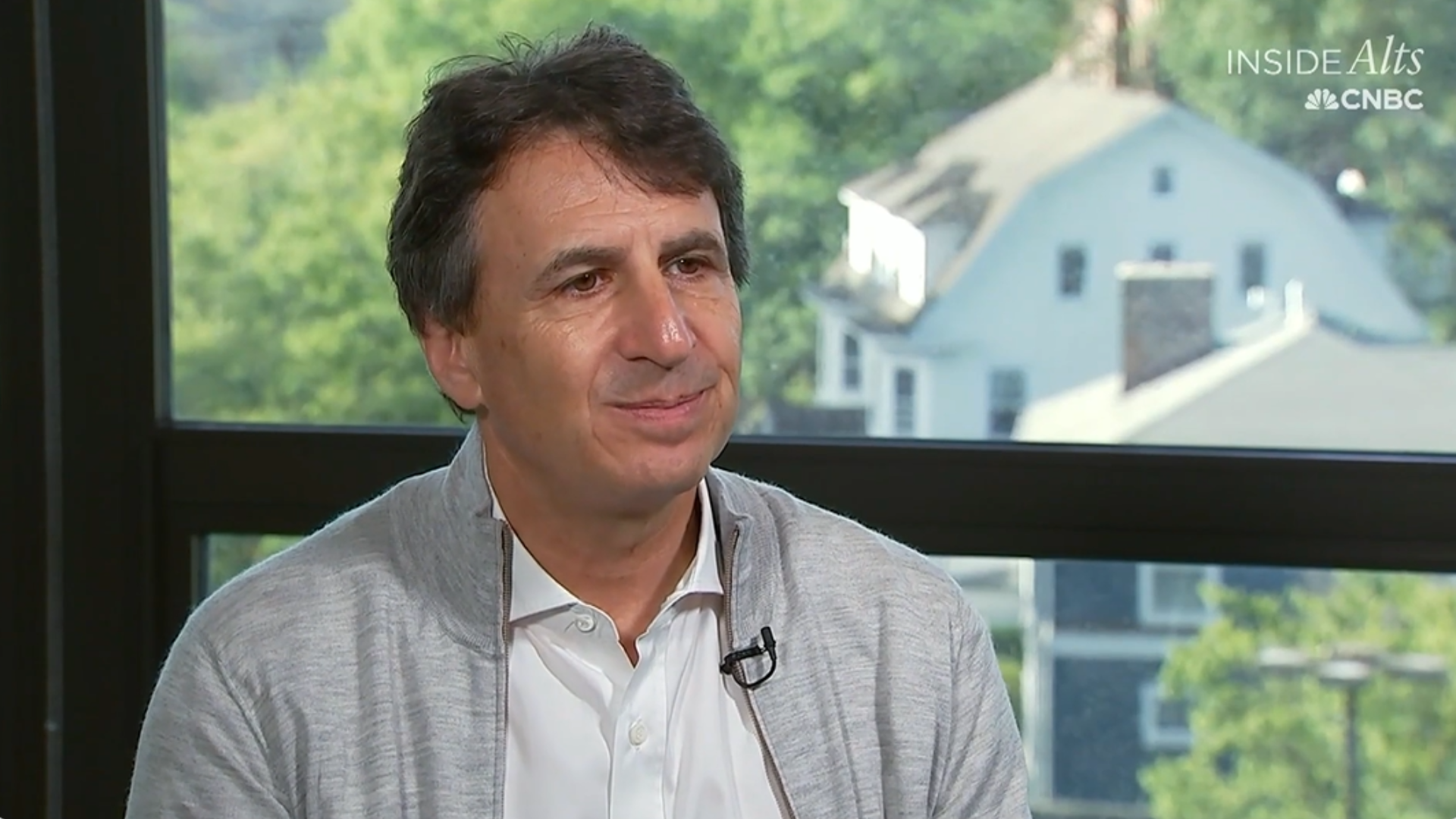
This interview originally aired at the Bloomberg New Economy Forum on November 18, 2025.


At the Bloomberg New Economy Forum, Marc Rowan joined Ravi Menon, former Managing Director of the Monetary Authority of Singapore, for a candid conversation on how global finance is adapting to meet the changing needs of economies.

They examined the rise of private markets as engines of long-term investment, the reshaping of public markets, and the mix of capital needed to support the cap-ex needs of critical infrastructure and the energy transition.

The Evolution of Market Structure & Role of Private Credit 

Marc detailed how capital markets have transformed since 2008: Public markets have grown more concentrated, traditional financing channels are constrained, and demand for long-duration capital has accelerated. Filling this gap is private credit, a more than forty trillion-dollar market that is largely investment grade. 

“Most of the size of the private credit market, as I see it, is some forty-one trillion dollars. Most of the market is investment grade. A fraction of it, some two trillion, is below investment grade, levered lending,” Marc noted, later adding, “[private credit] has become a core component of the fixed income landscape, supporting households, retirement savers and businesses alike.” 

He also emphasized how private capital is financing the long-term, capital-intensive projects driving growth across energy transition, manufacturing, and technology, and pointed to the broader forces reshaping credit markets.

“The big secular shifts are what cause credit dislocation and credit losses, not bad underwriting by one or two institutions.”

Ravi Menon emphasized the complementary roles of public and private capital in addressing global challenges, saying:

“I think the growth of the private markets has complemented what’s happening to the public markets… alternative sources of capital are emerging, and we should encourage that.”


Regulatory Evolution

Menon underscored the need for regulatory frameworks that reflect how modern markets operate and how different forms of capital take risk:

“Similar risks should be addressed in a similar fashion. The advantage of the private markets is that they don’t tap the mass deposit base, and so the treatment should be different, but there are risks. Regulators need to come up to speed on what those risks are and address them.”

He expanded on this point by stressing that the risk in lending depends on the source of funding, not the act of lending itself. As he put it, “credit or the act of lending, in and of itself, is not where the risk lies. The backing for that is where we should focus on.” Deposit-taking institutions require strict oversight because poor lending can threaten deposits, he noted, while lending funded by capital markets operates under a different risk profile. “That distinction needs to be made sharper,” he said, so risk can be calibrated appropriately across the system.

Marc added that today’s market signals point in the same direction. Prices are not cheap, long rates are unlikely to fall given persistent inflation pressures, and geopolitical uncertainty is elevated. With those conditions in place, the rational response for investors is to take risk down: move up in credit quality and reduce volatility and beta on the equity side. He noted that, from today’s starting point, history suggests equities could deliver flat returns over the next five years, and this is a moment to be positioned defensively.

Together, the discussion underscored how markets, regulation, and capital allocation are evolving to meet the demands of a more complex global economy, and how long-term, flexible capital will help shape the next phase of innovation and economic transformation.



KEY TAKEAWAYS: 
  • Private markets now fill the financing gap left by traditional banks.
  • Regulatory understanding must evolve beyond a bank-centric mindset.
  • Long-term private capital is essential to drive infrastructure and energy transition projects.

Explore More

Leading with Private Investment-Grade Credit

Private credit can help to finance business growth and innovation, support household prosperity and fuel the real economy.

Learn More

Recommended For You