Insights


Creating New and Better Solutions for the Modern World

We help businesses grow, retirees thrive, and innovation move forward with capital built for what’s next.

Filters
Filters
Strategies
Formats
Topics
Series
Clear All
Filters Clear All
Strategies
Formats
Topics
Series
Apollo’s podcast explores timely market insights from the Chief Economist of Apollo Global Management, Dr. Torsten Slok. The podcast features in-depth conversations about real asset investing, asset allocation, and alternative assets as market conditions evolve. 22:34
On this episode of the View From Apollo’s Allocation Insights series, Alex Wright and Diana Sands are joined by Partner and Co-Head of Apollo's Sponsor & Secondary Solutions business Steve Lessar to discuss how private market secondaries have evolved from a niche liquidity tool to a core allocation of modern private market portfolios, which can offer immediate exposure to mature assets and attractive risk-adjusted return potential.
Two teal spheres of unequal size resting on a wooden seesaw against a green background
When building a strategic private markets allocation, the waiting period can carry a meaningful cost. The question is not only how to access private markets, but how to manage uncalled capital during the ramp-up period. As investors incorporate private markets allocations in their portfolios, many do so through traditional closed-end drawdown funds. While that structure can offer access to attractive long-term opportunities, it can also introduce an often-overlooked challenge: committed capital is not invested capital.
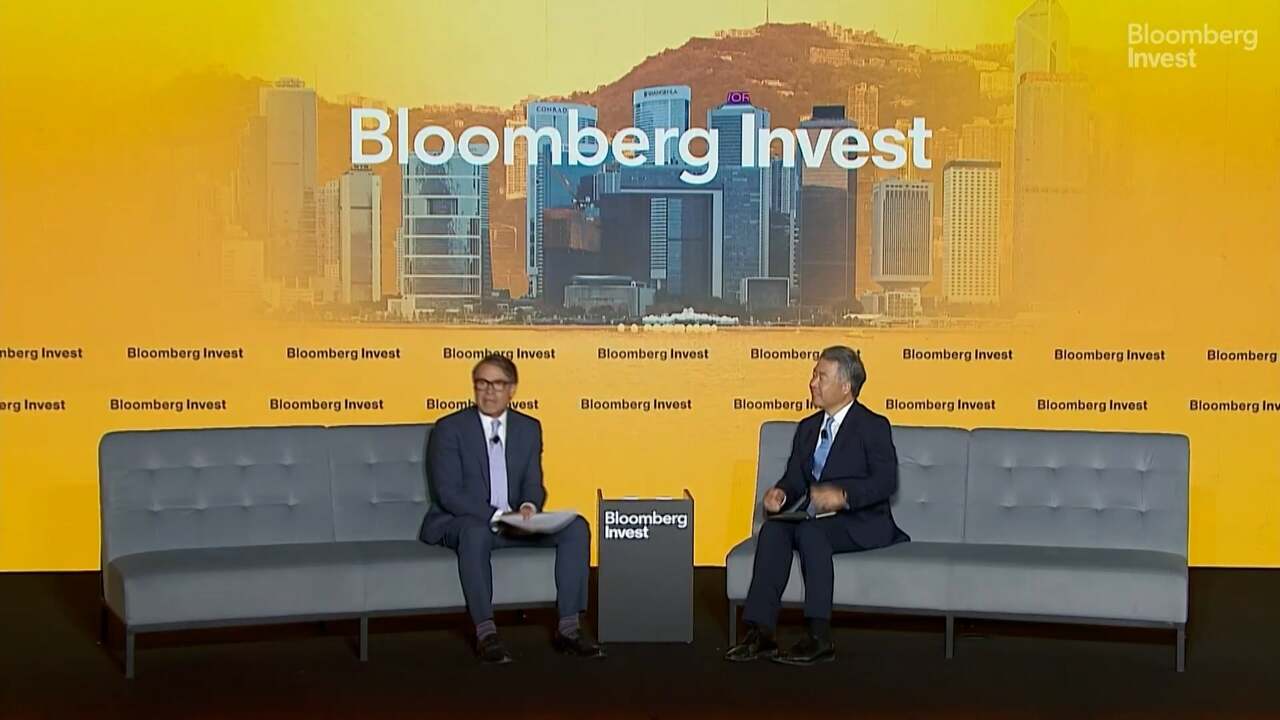
Panel discussion at Bloomberg Invest featuring three speakers seated on stage in front of a orange backdrop with the Bloomberg logo discussing private credit and retail access to private markets, with audience silhouettes in the foreground.
Apollo’s John Zito and State Street’s Yie-Hsin Hung on why private markets belong in retail portfolios, and what the next credit cycle could look like.
Large electronic display board inside a stock exchange showing JPX market data, including stock prices, indices, and trading volumes, reflecting real-time activity in public equity and capital markets trading. 3:12
Japan’s capital needs are expanding, and private capital is working alongside banks to deliver long-dated, investment-grade financing solutions, supporting corporate investment and long-term economic growth. Hear directly from Apollo Global Management CEO Marc Rowan and Eiji Ueda, Partner and Head of Asia Pacific, for more.
green background with waves
In 1964, a group of economists and policymakers warned the White House that a new technological revolution—what they called “cybernation”—would usher in an era of near-limitless production with progressively less need for human labor. The implication was clear: mass unemployment was not just possible, but inevitable. Sixty years later, the language has changed, but the fear has not. Artificial intelligence is more sophisticated, the technology more powerful, and the capital behind it more substantial. But the core question remains the same: will AI fundamentally displace labor, or reshape it?
green background with water droplets
Public equities are near all-time highs. By most accounts, portfolios look healthy. But beneath the surface, the foundation supporting those returns has weakened as risk compensation has thinned, concentration has intensified and traditional diversification is no longer working the way it used to. For investors who held through the recent turbulence, this may be a rare opportunity to reassess portfolio allocations before the market forces action.
Looking up through circular architecture
Credit markets are entering a period of transition. At Apollo’s 2026 Credit Annual Meeting, partners across the firm discussed the technological disruption, refinancing pressure from higher rates and geopolitical uncertainty that are beginning to drive greater dispersion across sectors, borrowers and capital structures.
As private equity evolves and advantages in the middle market become less reliable, scale, specialization and portfolio construction are becoming key drivers of performance in a more competitive environment.
Apollo Multi-Asset Prime Securities, or AMAPS, is a structured credit product enabling access to more diversified and higher-credit-quality assets that are risk-managed every day.

No pages containing all your search terms were found.

Suggestions:

  • Make sure all words are spelled correctly.
  • Try different keywords.
  • Try more general keywords.