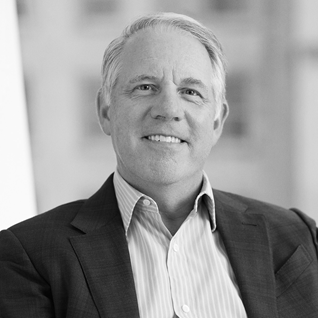
In an interview on Bloomberg TV, Apollo President Jim Zelter reflects on the state of global markets heading into 2026, noting that economic forecasts must be viewed with caution given the volatility of recent years. Despite ongoing concerns about overvalued technology stocks and inflation pressures, he highlights the remarkable resilience of the U.S. economy, supported by fiscal spending, a robust CapEx cycle and an active M&A backdrop.
Zelter explains that market expectations for both lower rates and accelerating earnings are difficult to reconcile and suggests that one side of the market is likely mispricing the environment. He emphasizes Apollo’s view that structural forces – including demographic trends and capital investment – are likely to support continued economic strength even as rates normalize.
A central theme of the interview is the massive capital required to build out AI-related data center infrastructure. Zelter estimates $5-7 trillion will be needed over the next 5-7 years, with only a portion funded through hyperscalers’ free cash flow or traditional investment-grade markets. The remaining financing gap, he notes, will reshape both public and private credit markets, altering the composition of the investment-grade issuer universe as large technology incumbents increasingly tap these channels.
He also distinguishes today’s financing environment from prior decades, observing that data center counterparties now include some of the strongest balance sheets in corporate history—meaning lenders can consider longer-duration and higher-quality risk than in past technology buildouts.
While some investors fear an impending distressed cycle, Zelter explains that current default rates remain modest. Instead, he expects “secular distressed” opportunities driven by AI-related business model disruption rather than cyclical downturns. This, in his view, underscores why dispersion makes it an attractive moment for credit investors, who can differentiate winners and losers amid rapid structural change.