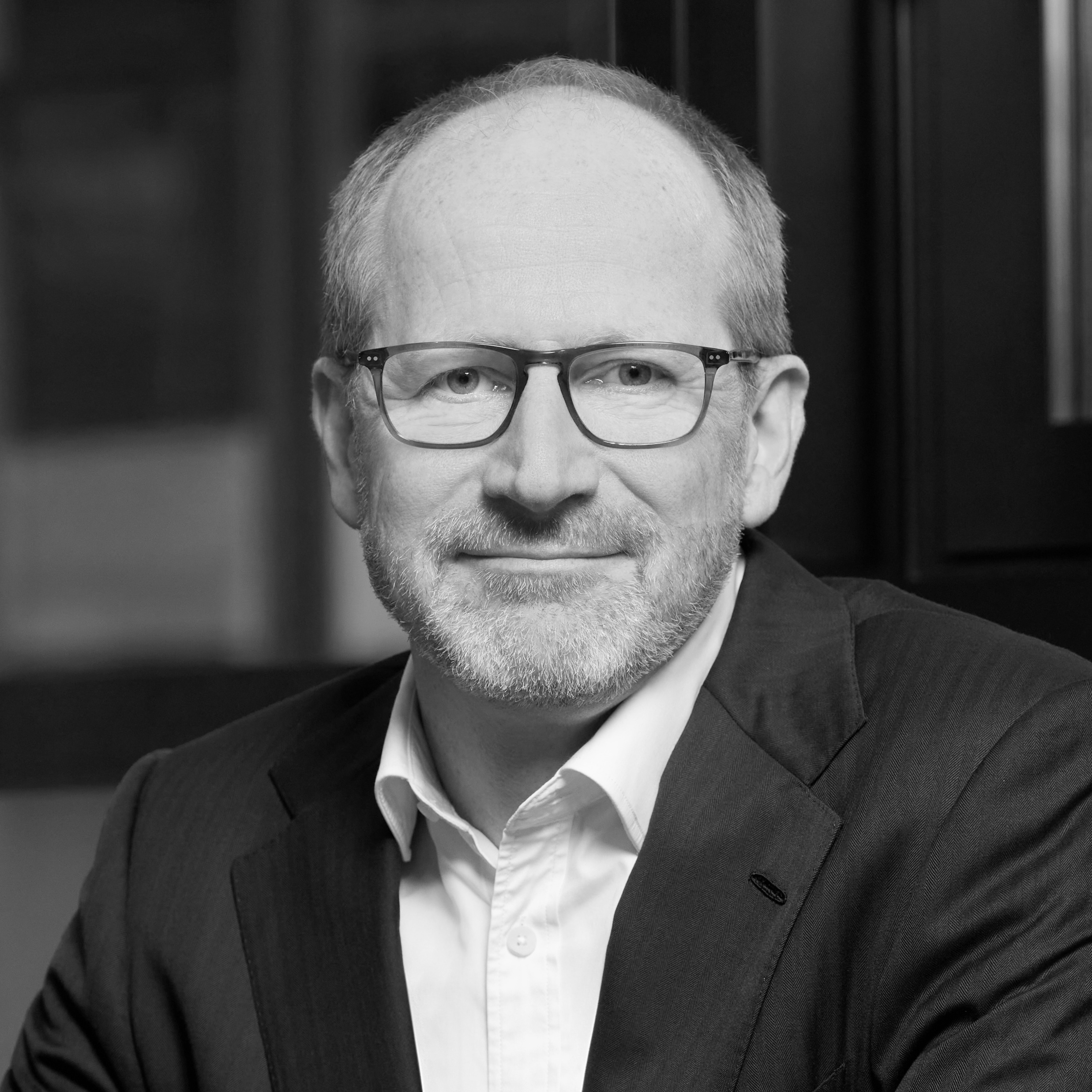
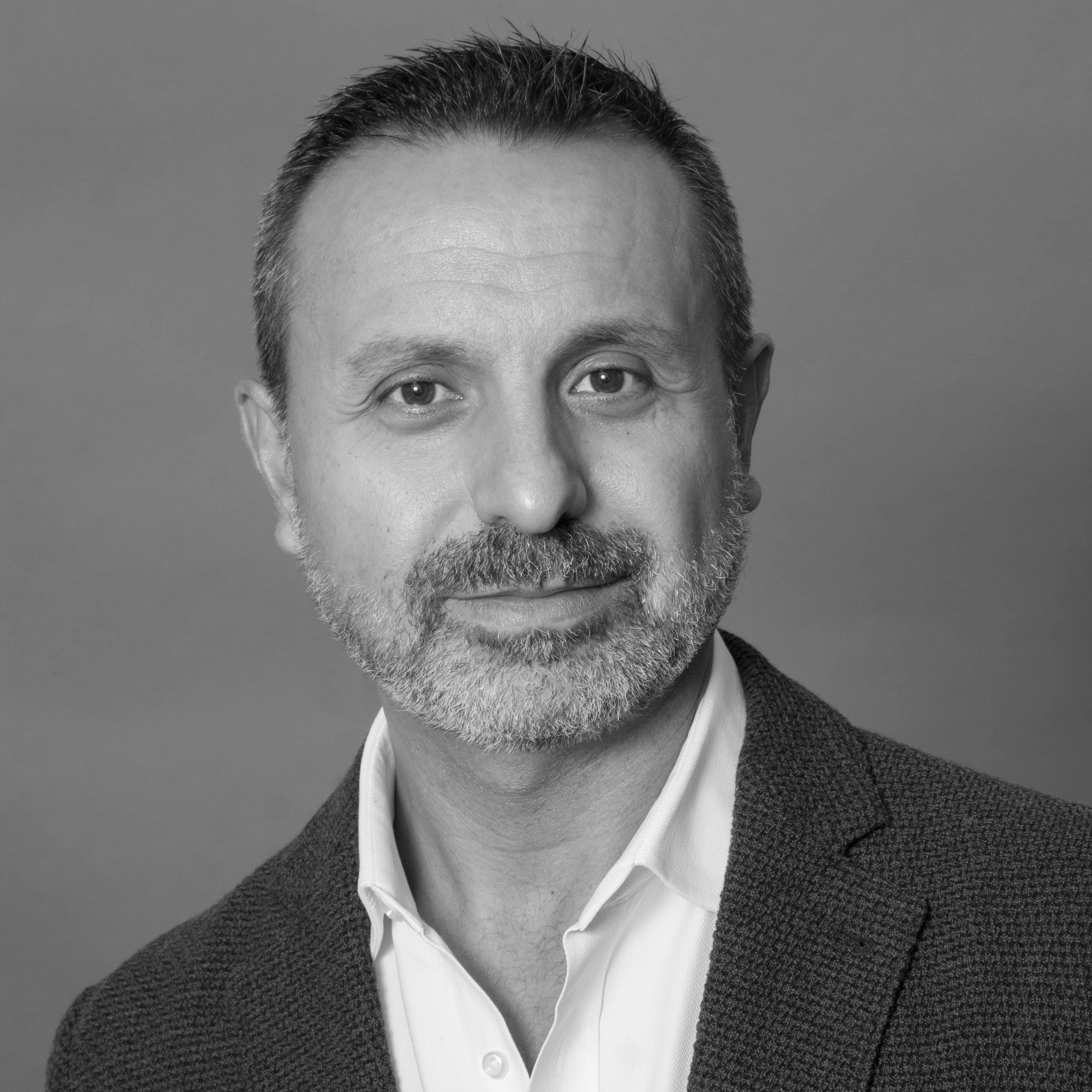
Q: I'd love to kick us off with a bit of your history in the asset class. Harry, let's start with you.
Harry Seekings: I first started in the infrastructure world in 1998, before infrastructure was even broadly recognized as an asset class. I started in advisory, moved into financing, and very quickly ended up in investment roles and then fund management. I spent seven years after the GFC living in New York, sourcing and executing value-add deals in the North American market when it was really in its infancy. That's actually when I first met Vittorio. We were both in a market that was just definitely in its early stages.
Vittorio Lacagnina: Harry and I go back quite a long time, and much like Harry, my career in infrastructure has been anything but linear. I started in the late nineties privatizing utilities, doing M&A before it was cool — before they were even called infra — spending my time across advisory, project finance, and principal investing. Now I run a hybrid role where I sit on the investment committee working closely with Harry for our flagship funds, while also looking after capital formation.
Q: Vittorio, take us through a little more of Apollo's infrastructure history.
Vittorio Lacagnina: Apollo has a 35-year history in infrastructure, which most people don't realize — Apollo is often thought of as a very large private credit or private equity platform. But infrastructure runs across a lot of what we've done. Over the last five years, we've stepped up our origination efforts significantly, originating about $150 billion in transactions. What I'd like to emphasize, though, is that this isn't about scale — it's about philosophy. Apollo is born as a value investor. One of our mottos is "purchase price matters." Globalization was a disinflationary force — the integration of China into the global economy expanded labor and manufacturing supply, kept prices and rates low. That era has ended. Deglobalization, aging demographics, energy transition, the massive CapEx cycle around power and digital — these are structurally inflationary forces. In that world, hard, long-lived physical assets with contracted revenues and CPI escalators are not just defensive — they're actually a way to invest offensively. That's what you want to own when the monetary regime has changed.
A large part of Apollo's balance sheet is affiliate balance sheet through our insurance affiliates — Apollo Athene and others — and those businesses invest alongside us in infrastructure. It's an asset class that jives very well with an insurance balance sheet. For our clients, that translates into two things: alignment, and hopefully a better Sharpe ratio — a higher unit of return per unit of risk across the full risk-return spectrum of infrastructure investing.
Q: Before we go much further, let's define infrastructure. What are the core characteristics that define it as an asset class?
Vittorio Lacagnina: One of our sayings internally is "if you kick it, it hurts." So think hard asset, think assets that can create real collateral. Beyond the hard asset concept, there are a few defining characteristics. First, visibility on returns and stability of earnings — we deal with assets that are regulated, so there's a formulaic way to establish revenues, and assets that are contracted for the long term, giving you visible cash flows from often investment-grade counterparties. When assets fulfill an essential service, that's a structural advantage. I think the key is how you adapt the capital structure to the investments you're making. Stability of earnings is really about getting that right.
Harry Seekngs: Infrastructure comes back to something pretty fundamental: assets with an inbuilt advantage. They represent a level of CapEx investment that's hard to replicate, and that provides the stability of earnings Vittorio described. Within that, you can apply different strategies across the risk-reward spectrum. At the core end, assets are de-risked and yielding — highly predictable cash flows from something like a regulated electricity or gas network, where most of your return comes from a dividend. At the value-add end, you're doing something to an asset: a CapEx program, or supporting a growth strategy that builds earnings and value to be crystallized as a capital gain at exit. A good example is Modern Aviation, one of our fund investments — an operator of private aviation facilities in North America where we can expand the footprint by building new facilities or acquiring other fixed-base operators, building an increasingly diversified platform that becomes more attractive to the next buyer over time. And in between, you've got everything else — mature assets with significant growth potential, paying some dividend but with a real opportunity over a medium-term horizon to add further value.
Q: Vittorio talked about the meaningful step-up in origination over the last five years. What's causing that — what's driving demand right now?
Harry Seekings: I don't think I've ever seen a market on the demand side quite like the one we're in. For many years in a low-rate environment, there was a relative dearth of infrastructure assets — a lot of capital looking for infrastructure as a diversifier, particularly because core infrastructure offered an attractive yield relative to government bonds. But we've now passed an inflection point where the investment need is accelerating faster than the capital available to meet it. We've got several capital investment cycles all happening simultaneously: AI and digitization, the rebuilding of entire power systems from generation through transmission and distribution, reshoring and manufacturing, and changes in global supply chains around LNG. And it's not just data centers — it's all the infrastructure around them: power generation, fiber optic networks, cooling systems. The data center market alone could require up to $5.2 trillion of investment by 2030 to meet the AI ambitions of the key hyperscalers, according to McKinsey. And then you look at the wider market — power, utilities, digital, transport — that's another $75 trillion or so in investment over the next decade. These are not small cycles. This is not a one or two-year investment cycle. This is a generational investment opportunity.
Vittorio Lacagnina: On the supply side, capital is not keeping up. Infrastructure as an asset class has grown to about $1.6 trillion today and is expected to reach over $3 trillion by 2030, but 45% of institutions are still under-allocated. A lot of clients are quietly asking us whether the 60/40 portfolio still does the job it used to — and in reality, it probably doesn't as reliably as before. Public equity has become increasingly concentrated. Bond markets are increasingly driven by fiscal dynamics and government debt levels rather than purely monetary policy. Infrastructure steps in. It can do several jobs in a portfolio: provide income, provide exposure to long-term structural growth themes, provide inflation sensitivity — especially with regulated returns and long-term contracts with CPI escalators. There's a direct, mechanical link between inflation and infrastructure revenues. The correlation between infrastructure and public equities tends to be around 0.3, and there's even a negative correlation with public bonds. When you put it all together and look at the Sharpe ratio, the analysis shows that adding infrastructure to traditional portfolios reduces volatility and improves the risk-adjusted return. Investors aren't just allocating because infrastructure needs to be built — they're allocating to solve a real portfolio problem.
Q: You've covered AI, digitization, reshoring, power. What are some of the less obvious areas of infrastructure that investors might be less focused on today?
Harry Seekings: The connection between digital and power is very close, and AI-driven load growth is reshaping power markets — particularly in North America, where there's a massive AI-related infrastructure buildout underway, but also in Europe. For two decades, electricity demand in America was essentially flat. That has completely changed. The growth in electricity demand over the next two decades is expected to be significant — it might only be low-single-digit growth per annum, but when you think about how that compounds and what it means in terms of generation, transmission, and distribution assets, that's a major CapEx opportunity. There are also supply chain bottlenecks — interconnection deadline queues, backlogs on turbine orders — so the market isn't functioning perfectly right now. The power-to-AI thesis is a big one for us.
On renewables — probably not where you'd expect me to go — but it's a highly fragmented market with a very long tail of developers and projects in North America and Europe. There are opportunities around scale, diversification of operating assets, and management teams with strong M&A track records. I also want to touch on natural gas and midstream specifically. Midstream assets have great infrastructure characteristics — very long duration, very predictable and steady cash flows. But layer in energy independence and energy security considerations, and some of those midstream assets in North America are becoming particularly interesting. There are quite a lot of midstream assets coming to market this year, giving investors like Apollo the opportunity to acquire essential parts of the gas supply chain — from the wellhead to LNG plants — which we think will remain very much in focus for markets that need some degree of energy security.
On digital, I do think we need to separate enthusiasm for the AI supply chain from disciplined underwriting. You're already seeing people who are allocating capital to AI infrastructure starting to ask tougher questions about where returns are actually coming from — not just rewarding capital spend on data centers, but how the investment is structured, where you get your money back, whether the lease from the hyperscaler or other tenants is sufficient to reward both credit and equity investors. That complexity and nuance is exactly where Apollo does well — value-oriented investing, teasing out opportunities with good downside protection while maintaining clear visibility on reward.
Q: You've also referenced transport — What are you seeing there?
Harry Seekings: Transport still needs love and investment as our economies grow, and it receives less attention than digital. But the size of the transport market is arguably equivalent to digital over the next decade — we think about $20 trillion to $25 trillion of CapEx investment opportunity. There are opportunities to acquire significant, large-scale assets where competition is more limited than in other parts of the infrastructure market — partly because scale and capital mobilization capability matter more. We have flexible capital at scale, and a lot of good transport assets tend to be quite large. Whether it's maritime, rail, toll roads — the movement of goods and people around the world is interesting. Complexity can be an advantage in transport, because it allows us to look closely and do deals while navigating it.
Vittorio Lacagnina: I'd also add environmental services. These are infrastructure assets we've invested in and own — waste management, rehabilitation of wastewater, the use of wastewater and brackish water for non-potable purposes in communities facing water scarcity. Whether it's on a municipal scale, with industrial customers, or in drought-affected communities, environmental services are a very important and sometimes overlooked part of the infrastructure universe.
Harry Seekings: Whatever the macroeconomic backdrop, we need all of these assets. The verdict is in: infrastructure can maintain its value across economic cycles. Whether it's raining or shining, we need waste infrastructure, transport infrastructure, our mobile phones, digital infrastructure. That is why infrastructure is such a compelling asset class and, I think, an essential diversifier for all investors.
Q: Apollo is a flexible investor — we play the entire capital structure. For those who've listened to our recent episode on hybrid capital, we're very active in the space between equity and credit. Vittorio, how does that play out in practice in infrastructure?
Vittorio Lacagnina: We continue to support CapEx, oftentimes sitting senior in the capital structure when we have strong collateral, and always thinking about long-term customer commitments before the infrastructure even comes online. On the AI and data center front, a good example is our investment in Yondr — in June 2023, we supported a family-owned platform that already had operational data centers in Europe, with a strong pipeline across Europe, the UK, Northern Virginia, and Johor. We supported it on an expansion journey through a structure where we sit senior to equity. Fast-forward a couple of years, and we supported the company through a sale to a large digital infrastructure specialist. The returns we made — both in absolute and risk-adjusted terms — reflected a strong value investment and a strong Sharpe ratio.
Q: You've both used "long duration" and "long term" a number of times. Our job is to put money to work, but it's also to return capital. How do you actually drive return of capital from assets that are inherently long-lived?
Vittorio Lacagnina: You're right to draw that distinction. There was a sticker on a client's office wall that said "DPI is the new IRR" — and I think it captures the real situation. IRR is a model output; it can be influenced by the timing of capital calls, the marks on unrealized assets, modeling assumptions. DPI is distributions — it's cash that actually lands in investors' accounts. Our first vintage infrastructure fund is fully monetized within a seven-year term. Our second vintage fund has DPI in the top five percentile in the industry. The dispersion in returns across managers really tells you that manager selection matters. Top-quartile funds typically reach a one-times DPI within seven years; bottom-quartile funds are still below one-times after year twelve. For clients managing income or distributions, that difference is enormous. As a franchise, we're focused on investing well and making sure quality translates into strong cash flows back to clients.
Harry Seekings: I'd put it simply: putting money to work in the right investment is relatively easy — doing the full lifecycle, putting money to work and then exiting, is that much harder. In a tough market, generating DPI takes real effort. It means making good investments and being prepared to work hard on the exit side.
Q: How do you see infrastructure's role evolving — particularly as the wealth channel is becoming a more meaningful part of the market?
Vittorio Lacagnina: After 2008, there was a "great rotation" away from credit and fixed income and into infrastructure — simply because infrastructure was a good source of yield and income. What we're seeing now is a different moment. Wealth investors are picking up on infrastructure trends, and what's really changed is access. Five years ago, most vehicles were catered for large institutional investors — drawdown funds with very limited liquidity. Now you have interval funds and open-ended structures that have solved the liquidity problem without destroying the investment case. Investors get quarterly redemption within limits, diversified exposure to the asset class, and the manager isn't forced to sell the portfolio to meet liquidity needs. We're still in the early innings of that transition, but we're very bullish on infrastructure access expanding to the wealth community and broader capital pools.
Q: Finally, looking ahead — what's one thing you're each most excited about in this sector?
Vittorio Lacagnina: I'm an avid scuba diver, and I also sit on the board of Ocean Exchange, an NGO working on solutions for ocean health. I've seen firsthand the relationship between the physical world and how we are set up to support life on this planet under stress. What's interesting about infrastructure today is that the investment case and the adaptation case are converging. We're starting to think about adaptation infrastructure, resilient infrastructure — grid hardening, the use of recycled water, flood protection systems, communication infrastructure that continues to operate when everything else fails. What felt like a niche in the overall infrastructure playbook is becoming more mainstream, and I think that's a really exciting development.
Harry Seekings: I really believe we're in the foothills of this generational CapEx investment cycle. This market has a long way to go in terms of years and volume of investing. I'm also a trustee of a charity in the UK called Outreach that helps students from economically disadvantaged backgrounds into well-paid jobs. I see a connection between that work and this market — it's a growth market that's going to offer enormous employment opportunities for young people, and because of its longevity, they'll be able to have fulfilling careers for decades, certain that the infrastructure being built today is essential, needed, and will find capital. The verdict is in: infrastructure is not niche. It's a core portfolio construction tool. If you don't have exposure to infrastructure in your portfolio right now, you're missing a once-in-a-lifetime opportunity to catch this cycle.
Note: This transcript has been edited for clarity. It does not represent a verbatim transcript of the podcast. Podcast recorded on August 5, 2026.