Written by

avatar

Partner

Did You Miss The Latest?
  • Private Investment Grade: An Efficient Allocation for Endowments and Foundations
  • Direct Lending: Strong Fundamentals, Shifting Dynamics
Share

How geopolitics and system constraints are combining to catalyze investment across the energy supply chain throughout the continent

2026 has put a finer point on a widely accepted challenge: Europe needs to urgently secure its energy future to avoid challenges becoming a full crisis.

Across the continent we face a confluence of factors that call for a broader reinvention of our energy system. We’re seeing rising demand for electricity, for heating and cooling, for transport, real estate and more – demand which will only accelerate as we build more AI and digital infrastructure in the region. At the same time, Europe is working to strengthen energy security, to reduce exposure to imported fuels and to advance the energy transition, all while relying on infrastructure that in many cases was built for a very different energy mix.

That combination demands a broader reinvention of the energy system. Europe will need to add new sources of generation and storage; expand and modernize the networks that move power; and find ways to use existing capacity more efficiently. EU electricity demand is forecast to grow approximately 2.3% annually through 2030, adding roughly 300 TWh of consumption over the next five years.(1) In the UK, Britain’s National Energy System Operator projects that Great Britain's electricity demand could nearly triple by 2050, rising from 290 TWh today to 705-797 TWh.(2) With a growing share of generation coming from intermittent sources, meeting this demand will require significantly more capacity across generation sources as well as storage.

In short, Europe needs to produce more energy, make better use of the energy we have and invest in the infrastructure that connects supply with demand.

The scale of that undertaking is unprecedented, with recent estimates from the European Commission suggesting investment in the energy sector will need to reach between €650 and €800 billion annually between 2026 and 2030, nearly three times the annual average between 2011 and 2021.(3) (4) Making these numbers a reality will call for diverse sources of funding, including large-scale, long-term private capital solutions.

Getting into the Mix

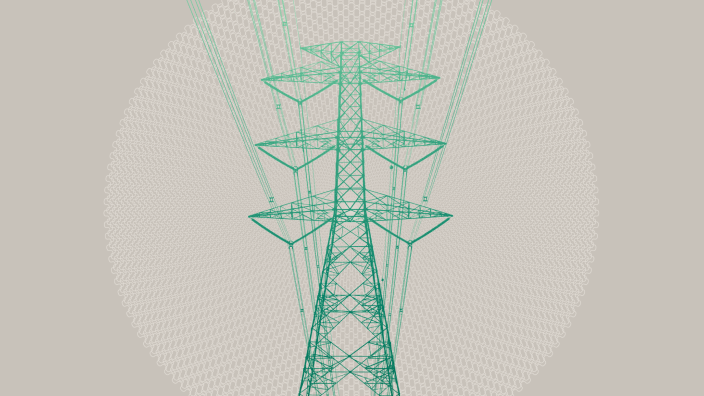
Research is increasingly emphasizing integration as an amplifier of increased energy capacity: the ability to combine investment in generation, storage, networks and demand management in ways that improve the performance of the system as a whole.  This becomes even more important as Europe’s generation mix evolves. While renewable energy can add significant volumes of low-emissions power, that generation is intermittent and needs additional capacity on hand to provide stability of supply on the grid.  Low-carbon nuclear can provide dependable generation across longer periods and gas-fired capacity can provide flexibility during periods of high demand or lower renewable output. Storage can shift power across hours and days, while stronger transmission and interconnection allow electricity to move between regions with different patterns of supply and demand.  Distribution networks, for decades designed to send electrons in one direction, can be enhanced to cope with distributed, decentralised generation.

ENTSO-E projects that Europe's power system flexibility needs will approximately double between 2025 and 2033, reflecting increasing variability in electricity generation and consumption.(5) Storage is one part of that response, but the IEA also points to flexible generation, demand response and network investment as increasingly important to integrating a more diverse mix of generation securely and cost effectively.

Europe enters that buildout with significant existing infrastructure needs. The IEA estimates that more than 2,500 gigawatts of generation, storage and large-load projects are currently stalled in grid connection queues globally.(6) Approximately 40% of EU distribution grids are more than 40 years old, and the European Commission estimates that €584 billion of grid investment will be required this decade.(7)

All this investment is needed to improve the quantity and reliability of the power that the system is able to deliver.

“The Global Industrial Renaissance is well underway in Europe and, in many respects, the infrastructure investment needs here are even greater than those we are seeing in the US.”

“It’s a developed but complex market that needs significant rewiring, apart from anything else, in order to meet energy demand while delivering the energy transition.”

Harry Seekings, Partner, Chair of Apollo Infrastructure Group and Head of Infrastructure Equity

Constrained or Catalyzed?

The challenges Europe is facing are huge and recent years have shown that progress, for example with the energy transition, is not always smoothly linear.  However, history has shown that the periods of energy disruption have served as a catalyst for innovation, spurring rapid, consequential and lasting changes to energy systems and markets.

The oil crises of the 1970s exposed the vulnerabilities created by dependence on a concentrated source of energy. Profound change followed. Between 1975 and 1985, the EU added roughly 80 gigawatts of nuclear capacity. The IEA has noted that technologies including solar photovoltaics, wind and lithium-ion batteries all trace important stages of their development to the innovation response that followed the period.(8) (9)

By the early 2000s, Europe’s import dependence was accelerating as domestic oil and gas production declined. Foreign dependence increased further between 2000 and 2011, with EU energy imports rising from 46.7% to 53.8%; natural gas dependence rose from 48.9% to 67% over the same period, leaving the region more exposed to external supply shocks.(10)

Following Russia’s invasion of Ukraine, the continent moved quickly to diversify gas supplies in particular, expanding LNG import capacity and accelerating renewable development. New floating storage and regasification units, terminals and other import infrastructure opened alternative sources of gas, while the push to strengthen energy security also accelerated investment in renewables, efficiency and the broader energy system.

Geopolitical conflicts and supply constraints have brought about such a moment in Europe again today. Between March and August 2026, following the closing of the Strait of Hormuz, the EU incurred an estimated $54 billion in additional net fossil-fuel costs relative to what pre-war markets had expected.(11) That is $54 billion absorbed by higher prices, without a corresponding increase in productive energy capacity.

Reducing exposure to future external price shocks requires more secure regional supply and, consequently, lower dependence on imported fuels. That can include efforts to increase access to domestic energy, while also getting more useful energy from each unit consumed through greater electrification and efficiency.(12)

Historical precedent suggests that periods of disruption can accelerate changes that might otherwise take much longer – if the key ingredients are in place to act as a catalyst.  Grasping the opportunity presented by current geopolitical events requires a policy response and the corresponding access to capital that can support investment across a wide range of assets, technologies and risk profiles.

Private Capital-Powered

Private markets are expected to play an important role in meeting that need, complementing governments, banks and public capital markets with long-term and flexible capital.(13) (14)

That can be particularly important for corporates pursuing projects that require significant scale, bespoke structures or financing aligned with the duration and complexity of the underlying asset: a regulated transmission network does not carry the same risks as an offshore wind development, while nuclear infrastructure has different time horizons from other forms of generation or storage. Mature infrastructure, new generation and emerging technologies each present different questions of duration, risk and return, requiring capital that can be structured accordingly.

The breadth of that opportunity is already visible in the activity of Apollo-managed funds, which over the past 24 months have committed capital across a wide spectrum of Europe’s energy system, including wind, nuclear, natural gas and grid infrastructure:

  • Equity capital alongside RWE to support German electricity transmission infrastructure;
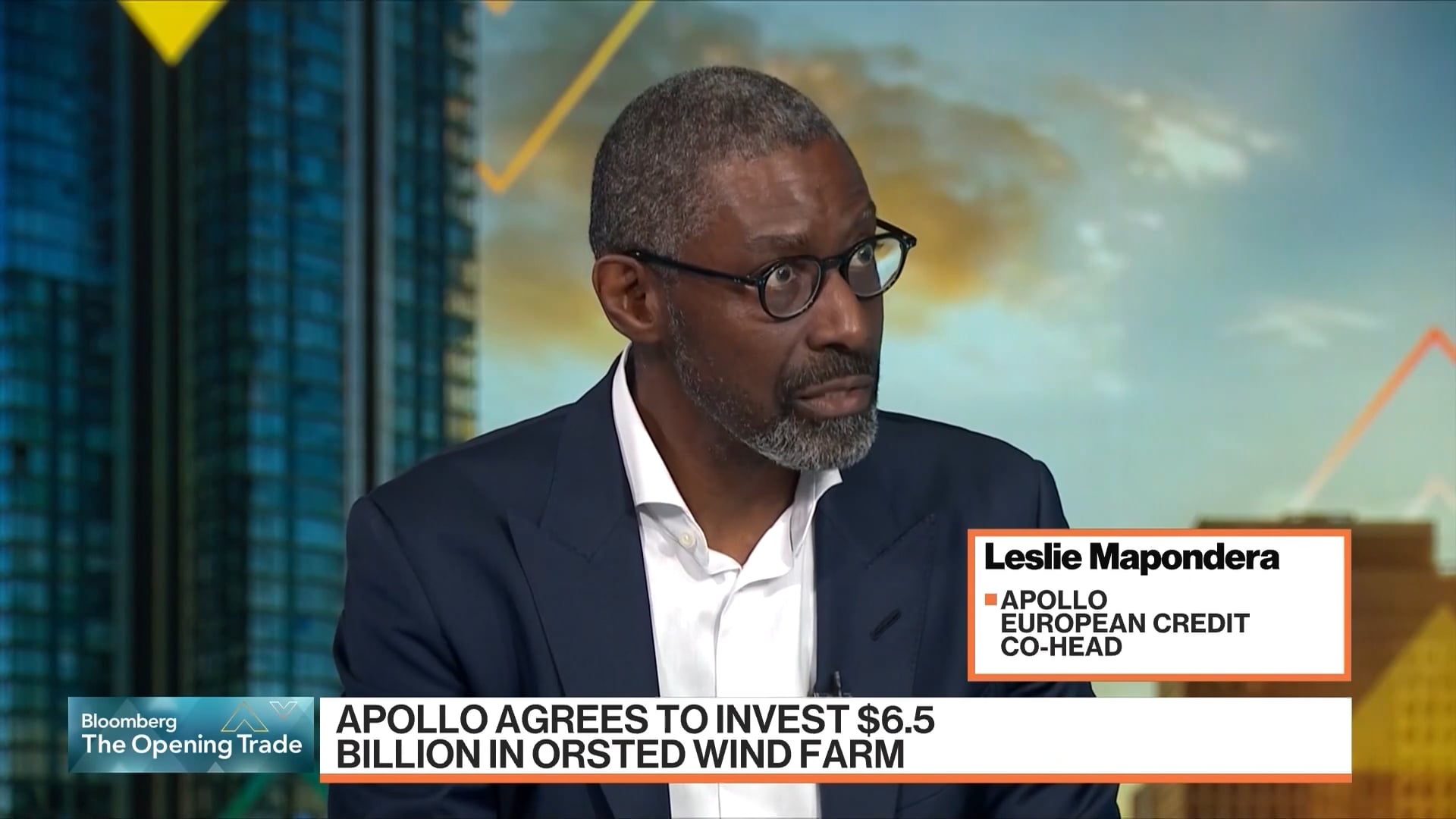
  • Scaled investment across credit and equity in Ørsted’s offshore wind development;
  • Long-dated financing for EDF supporting nuclear development in the UK;
  • And investment alongside counterparties including bp in pipeline infrastructure moving natural gas from the Caspian Basin toward Southern Europe.(15)

The structures behind those investments differ because the counterparty needs behind them differ. EDF was seeking capital to support long-dated ownership of the Hinkley Point C nuclear project. In other cases, such as with RWE and Ørsted, counterparties may require financing for significant capital expenditure, development and construction needs or for greater balance-sheet flexibility. Private capital can be tailored to those specific requirements, including through different positions in the capital structure, investment horizons and financing formats.

That creates something of a paradox for Europe’s energy reinvention: the need is systemic, but the financing solutions are often highly bespoke. Delivering the investment the Europe requires will depend on providers of flexible capital who can operate at scale, while also dealing creatively with complexity and who are able to take a long-term view.


Key Takeaways

  • Europe must invest around €650 billion annually in energy infrastructure from 2026–2030 to meet rising energy demand and transition goals. That is more than 2.5x the investment pace from 2011 to 2021 and more than the €480 billion that the IEA estimates was invested in EU clean energy, efficiency and grids in 2025.
  • The Strait of Hormuz closure is most recent example of a geopolitical event that can catalyze investment.  The closure cost the EU an estimated $54 billion in additional net fossil-fuel import costs in six months, reinforcing the case for more resilient and diversified energy supply.
  • Estimates suggest 80%+ of EU oil and natural gas are imported, with electrification presenting options several times more efficient than the conventional alternatives they replace.
  • Private capital can complement governments, banks and public markets in supporting Europe's energy buildout, offering long-term, flexible structures across the capital stack for assets ranging from regulated transmission to emerging renewable technologies.
  • Apollo-managed funds have committed approximately $20 billion across major European energy infrastructure transactions over recent years, including Ørsted's Hornsea 3, EDF financing supporting Hinkley Point C, RWE's interest in Amprion and bp gas infrastructure.

Sources

  1. International Energy Agency, “Electricity 2026,” February 2026. The IEA forecasts EU electricity demand to grow approximately 2.3% annually through 2030, adding roughly 300 TWh of consumption over five years, driven by electrification across transportation, buildings and industry and by expanding data center capacity. Electric vehicles alone are expected to contribute more than 100 TWh of additional demand by 2030.
  2. National Energy System Operator (NESO), “Future Energy Scenarios: Pathways to Net Zero,” July 2025. NESO projects that Great Britain's electricity demand could nearly triple by 2050, rising from approximately 290 TWh today to 705–797 TWh, reflecting electrification of transportation, heating and other sectors.
  3. European Commission, “Clean Energy Investment Strategy,” March 2026. The Commission estimates approximately €660 billion of annual energy-sector investment will be required between 2026 and 2030, compared with an annual average of €240 billion between 2011 and 2021. The European Parliament's 2026 energy-transition briefing cites the same requirement and notes that the IEA estimates EU investment in clean energy, efficiency and grids reached approximately €480 billion in 2025.
  4. European Commission, “The future of European competitiveness,” September 2024. The report estimates an additional €750 billion to €800 billion of annual investment will be required to close the innovation gap with global competitors and prevent economic decline.
  5. ENTSO-E, “System Flexibility Needs for the Energy Transition,” December 2024. ENTSO-E projects that Europe's power system flexibility needs will approximately double between 2025 and 2033, reflecting increasing variability in electricity generation and consumption.
  6. International Energy Agency, “Modernising grids in the age of electricity,” Executive Summary. https://www.iea.org/reports/modernising-grids-in-the-age-of-electricity/executive-summary
  7. European Commission, European Grids. Approximately 40% of EU distribution grids are more than 40 years old and an estimated €584 billion of grid investment is required this decade.
  8. International Energy Agency, “The energy crisis creates even stronger impetus for EU electrification,” 2026. The IEA notes that the EU added approximately 80 GW of nuclear capacity between 1975 and 1985 and that new-vehicle efficiency in France improved approximately 20%. It also reports approximately 30% growth in EU EV sales during the first four months of 2026 and 17% growth in heat-pump sales across 11 European markets in the first quarter.
  9. International Energy Agency, “Energy innovation has a commercialisation problem,” 2026. The IEA notes that major energy disruptions have historically influenced technological development, including early development of solar PV, wind and lithium-ion batteries following the 1970s oil crisis.
  10. Eurostat, Sustainable Development in the European Union: 2013 Monitoring Report of the EU Sustainable Development Strategy, Chapter 6, “Climate Change and Energy,” page 194, Figure 6.13, “Energy Dependence, EU-27.”
  11. Centre for Research on Energy and Clean Air, “What the Hormuz crisis has cost fossil fuel importers,” August 2026. The analysis estimates an additional $54 billion of net fossil-fuel costs for the EU between March and August 2026 compared with pre-war market expectations. CREA also estimates the EU's gross additional import cost at $78 billion.
  12. European Commission, Electrification Action Plan, July 2026. The Commission aims to increase electrification from approximately 23% of energy use today to 46% by 2040 and estimates that reaching that level could reduce EU fossil-fuel import costs by approximately €260 billion annually. The European Parliament's 2026 energy-transition briefing is a secondary reference for the current 23% rate. The plan also notes that the EU is heavily reliant on external suppliers, importing more than 80% of the natural gas it consumes and over 90% of its oil
  13. European Investment Bank, EIB Investment Report 2025/26. The report notes that Europe's energy transformation entails substantial upfront costs and highlights financial instruments that can reduce risk and attract capital.
  14. OECD, work on institutional investors and infrastructure financing. The OECD identifies institutional investors' large pools of long-term capital as an important source for closing infrastructure investment gaps.
  15. Apollo transaction announcements, apollo.com. Ørsted Hornsea 3: $6.5 billion commitment. EDF / Hinkley Point C: up to £4.5 billion. RWE / Amprion: €3.2 billion. bp: more than $4.5 billion invested, including TANAP and TAP pipeline interests.
Did You Miss The Latest?
  • Private Investment Grade: An Efficient Allocation for Endowments and Foundations
  • Direct Lending: Strong Fundamentals, Shifting Dynamics
Share
Download PDF

Related Insights